By Charles McMahon
cmcmahon@seacoastonline.com
November 23, 2011 2:00 AM
PORTSMOUTH — It was an emotional moment on Tuesday morning at Portsmouth Regional Hospital, as Planet Fitness employee Whitni Hendley met the man whose life she helped save just one week earlier.
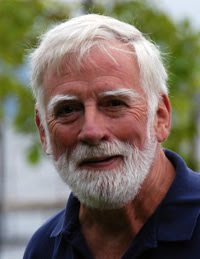
John Foster, 65, of Rye, said he's thankful Hendley was working when he collapsed while running on a treadmill Nov. 15 at the Lafayette Road gym.
What caused John Foster to collapse?
Cardiothoracic surgeon Dr. Robert Helm said Foster's (below) heart stopped because of a condition called bicuspid aortic valve.
What is bicuspid aortic valve? It's a disorder in which the valve has only two leaflets, or flaps, that control blood flow through the heart. Like the tricuspid valve and the pulmonary valves, normal aortic valves have three tissue leaflets.
The risk: Over time, ongoing strain on the valve and heart can lead to permanent and life-threatening complications, including an enlarged heart, abnormal heart rhythms and congestive heart failure.
To learn CPR: The American Heart Association teaches the technique for adults and infants. To sign up, call 433-4041.
"I remember going to the gym and starting my workout," he said. "The next thing I know, I woke up in the hospital and they told me what she did."
Hendley, 22, of York, Maine, was working at the front desk at about 6:45 a.m. when Foster went into cardiac arrest and stopped breathing. Hendley grabbed the gym's automated external defibrillator, checked for vital signs, then shocked the man until he regained a pulse.
With the assistance of another gym patron, Hendley performed cardiopulmonary resuscitation on Foster until paramedics arrived.
Her lifesaving efforts have been called heroic by gym members and emergency responders. Hendley said she has received congratulations from just about everyone in the gym community, perhaps the most meaningful of which came Tuesday when Hendley visited Foster at the local hospital.
"I couldn't believe it," he said. "Somebody had to take charge, and (Whitni) did. I'm very grateful. She did an amazing job."
Joining the pair for the reunion was Portsmouth Regional Hospital cardiothoracic surgeon Dr. Robert Helm, who helped explain what led to Foster's cardiac arrest last week.
Helm said Foster had a congenital bicuspid aortic valve, meaning the valve had only two leaflets, or flaps, to control blood flow from the heart. There normally are three.
"The heart can't get enough blood," he said of the disorder that affects about 1.5 percent of the population.
The heart surgeon said he performed a three-hour surgery on Foster last week. The surgery included a small incision in Foster's chest.
"We replaced his aortic valve and we repaired his mitral valve," Helm said.
Foster said he at first didn't want to have the surgery.
"I was not planning on staying," he said. "Then they told me what they knew and my daughter showed up. They played the 'grandkids' card."
Since the surgery, Foster said he feels great. He credited not only Hendley for the fact he is still alive, but also Helm and his team for performing the important surgery.
"Everyone's been amazing," he said.
Helm said the story involving Hendley and Foster could be educational on all fronts. He said the fact Planet Fitness trains its employees and had a defibrillator on scene was vitally important.
"These weren't around five years ago," he said of the life-saving devices.
Helm said Foster's experience should also serve as a wake-up call to people who may have heart problems and are too afraid to get them checked out.
"It's a good thing for everybody to know," he said.
With Thanksgiving coming, Foster said, he's thankful he will have a chance to celebrate the holiday with his family. Foster said he imagines this holiday, more than any other, will be a special one.
The Rye man said he is looking forward to getting back to his life once he's recovered, adding he'll surely feel like he's in good hands when is able to go back to the gym.
"I'm looking forward to working out again," he said.
When you see a cardiac arrest, your brain fights you - "No, this isn't really happening" - and the circumstances fight you - "Dang! in CPR class the manikin didn't weigh very much and wasn't sitting in a deep chair. This blog deals with practical details and presents reports of "saves." Let me have your questions and comments - they will steer the course of this blog. This blog is brought to you by the volunteers at www.slicc.org
Saturday, November 26, 2011


Friday, November 25, 2011
Bystander helps to save man in cardiac arrest at Ottawa tennis club
By Meghan Hurley, The Ottawa Citizen November 24, 2011
OTTAWA — A bystander at an Ottawa tennis club helped to save a 79-year-old man who suffered from a sudden cardiac arrest Thursday afternoon.
Paramedics responded to a call for a man in cardiac arrest West Ottawa Tennis Club around 2:37 p.m.
A paramedic communications officer guided the caller through CPR and using a defibrillator.
When advanced-care paramedics arrived, the man regained a pulse.
Paramedics treated the man with advanced airway management and cardiac monitoring.
The man was taken to hospital in serious conditions.
Paramedics said calling 911, early CPR, defibrillation and advanced paramedic care dramatically increases heart attack survival rates.
This was the second time in the past few days that early CPR and defibrillation helped to save a person in cardiac arrest.
Bystanders at a curling rink helped save a 66-year-old man after he suffered a heart attack Tuesday evening.
The man regained a pulse after bystanders gave him CPR and used a defibrillator before paramedics arrived at the RCMP Curling Rink around 6:30 p.m.
Paramedics intubated the man and gave him medication before he was taken to hospital in serious condition.
mhurley@ottawacitizen.com twitter.com/meghan_hurley © Copyright (c) The Ottawa Citizen
OTTAWA — A bystander at an Ottawa tennis club helped to save a 79-year-old man who suffered from a sudden cardiac arrest Thursday afternoon.
Paramedics responded to a call for a man in cardiac arrest West Ottawa Tennis Club around 2:37 p.m.
A paramedic communications officer guided the caller through CPR and using a defibrillator.
When advanced-care paramedics arrived, the man regained a pulse.
Paramedics treated the man with advanced airway management and cardiac monitoring.
The man was taken to hospital in serious conditions.
Paramedics said calling 911, early CPR, defibrillation and advanced paramedic care dramatically increases heart attack survival rates.
This was the second time in the past few days that early CPR and defibrillation helped to save a person in cardiac arrest.
Bystanders at a curling rink helped save a 66-year-old man after he suffered a heart attack Tuesday evening.
The man regained a pulse after bystanders gave him CPR and used a defibrillator before paramedics arrived at the RCMP Curling Rink around 6:30 p.m.
Paramedics intubated the man and gave him medication before he was taken to hospital in serious condition.
mhurley@ottawacitizen.com twitter.com/meghan_hurley © Copyright (c) The Ottawa Citizen
Saturday, November 19, 2011
This is the way it is supposed to work...
The three Whiteland students gathered around their classmate as his body convulsed.
The boy had gone into a seizure, his eyes rolling back in his head and his limbs jerking in spasms. Suddenly he stopped breathing and went limp.
Katie Foster, Brittni Dodd and Mercedes Hart had practiced CPR for hours in their health careers classes. Now, they were called on to act.
The three Whiteland Community High School students helped save the life of a classmate on a school bus Tuesday morning.
Sunday, November 13, 2011
Technically, he was right...
Bob Ruthman died at Andy Rooney's memorial service.
as reported on AntiMusic.com
On Thursday Andy Rooney's College Roommate Suffers Cardiac Arrest At Memorial was a top story. Here is the recap: (TMZ) Andy Rooney's college roommate was revived after going into cardiac arrest at a memorial for the CBS commentator yesterday.
Andy's son, Brian Rooney, got up on a chair and announced to the crowd that Ruthman had died.
We are now told the FDNY revived Ruthman and he is currently in intensive care at a New York hospital.
Andy's son, Brian Rooney, got up on a chair and announced to the crowd that Ruthman had died.
We are now told the FDNY revived Ruthman and he is currently in intensive care at a New York hospital.
Friday, November 11, 2011
OK, teammates, this is not complex
66% of out-of-hospital cardiac arrests occur in the home.
Many cardiac arrest are accompanied by intermittent, gasping respirations. That sounds like intermittent, loud snoring.
Fewer than a third of all cardiac arrests benefit from Bystander CPR.
If the person you live with does not know how to perform Bystander CPR, you are ten times more likely to stay dead if you suffer a sudden cardiac arrest, as someone in this country does every 90 seconds.
If the point hasn't escaped you, get your spouse trained in Bystander CPR immediately.
www.slicc.org
PLEASE!
Many cardiac arrest are accompanied by intermittent, gasping respirations. That sounds like intermittent, loud snoring.
Fewer than a third of all cardiac arrests benefit from Bystander CPR.
If the person you live with does not know how to perform Bystander CPR, you are ten times more likely to stay dead if you suffer a sudden cardiac arrest, as someone in this country does every 90 seconds.
If the point hasn't escaped you, get your spouse trained in Bystander CPR immediately.
www.slicc.org
PLEASE!
Farwell teen honored for saving neighbor
Published: Friday, November 11, 2011
By SUSAN FIELD
Clare Managing Editor
Tyler Mester didn’t know the first thing about cardiopulmonary resuscitation when he heard a neighbor’s call for help nearly two weeks ago.
That didn’t stop Tyler, 16, from rushing to his neighbor’s side and calling 911.
Listening to an emergency dispatcher, Tyler, a sophomore at Farwell High School, followed directions on where to place his hands to perform CPR.
Meanwhile, a crew from Mobile Medical Response ambulance service was en route.
Tyler’s actions Oct. 30 likely saved his neighbor’s life, MMR Supervisor Matt Drake said Friday during a Veterans Day assembly at Farwell High School.
After students, teachers and staff paid tribute to those who have fought for America’s freedoms, Drake and other MMR staff took the stage to give Tyler a medal and plaque for his efforts.
“He came to someone in the community in his time of need,” Drake said, adding that Tyler’s actions impacted rescuers and others in the healthcare profession.
Tyler performed chest compressions while paramedics rushed to the scene.
“Tyler did this without being asked,” Drake said. “It’s a pretty important thing for a young person of his age.”
Physician James Inman, medical director of emergency services at MidMichigan Medical Center-Clare, who was on duty when Tyler’s neighbor was rushed to the hospital, also offered praise.
Often times, patients are in full cardiac arrest when arriving at emergency rooms and can’t be helped, Inman said.
There is no question in his mind that Tyler’s neighbor survived because of his efforts and those of MMR paramedics, Inman said.
Tyler was instrumental in saving his neighbor’s life, the physician said.
Without Tyler’s help, paramedics would not have been able to perform their jobs as effectively as they did, Drake said.
Tyler, however, took the attention -- including applause from students and staff -- in stride.
He said he simply did what had to be done and that he was surprised to find out he was being rewarded for his efforts.
Tyler received gifts from MMMC-Clare.
Mary Jo Beal, the emergency operations coordinator at MMMC-Clare, gave Tyler “double congratulations” when she found that he did not know CPR when he helped his neighbor.
Beal offered Tyler lessons and said hospital officials are encouraging more young people to learn CPR.
Tyler is the son of Amy Garver and David Mester.
Tyler Mester didn’t know the first thing about cardiopulmonary resuscitation when he heard a neighbor’s call for help nearly two weeks ago.
That didn’t stop Tyler, 16, from rushing to his neighbor’s side and calling 911.
Listening to an emergency dispatcher, Tyler, a sophomore at Farwell High School, followed directions on where to place his hands to perform CPR.
Meanwhile, a crew from Mobile Medical Response ambulance service was en route.
Tyler’s actions Oct. 30 likely saved his neighbor’s life, MMR Supervisor Matt Drake said Friday during a Veterans Day assembly at Farwell High School.
After students, teachers and staff paid tribute to those who have fought for America’s freedoms, Drake and other MMR staff took the stage to give Tyler a medal and plaque for his efforts.
“He came to someone in the community in his time of need,” Drake said, adding that Tyler’s actions impacted rescuers and others in the healthcare profession.
Tyler performed chest compressions while paramedics rushed to the scene.
“Tyler did this without being asked,” Drake said. “It’s a pretty important thing for a young person of his age.”
Physician James Inman, medical director of emergency services at MidMichigan Medical Center-Clare, who was on duty when Tyler’s neighbor was rushed to the hospital, also offered praise.
Often times, patients are in full cardiac arrest when arriving at emergency rooms and can’t be helped, Inman said.
There is no question in his mind that Tyler’s neighbor survived because of his efforts and those of MMR paramedics, Inman said.
Tyler was instrumental in saving his neighbor’s life, the physician said.
Without Tyler’s help, paramedics would not have been able to perform their jobs as effectively as they did, Drake said.
Tyler, however, took the attention -- including applause from students and staff -- in stride.
He said he simply did what had to be done and that he was surprised to find out he was being rewarded for his efforts.
Tyler received gifts from MMMC-Clare.
Mary Jo Beal, the emergency operations coordinator at MMMC-Clare, gave Tyler “double congratulations” when she found that he did not know CPR when he helped his neighbor.
Beal offered Tyler lessons and said hospital officials are encouraging more young people to learn CPR.
Tyler is the son of Amy Garver and David Mester.
Wednesday, November 9, 2011
New lease on life after heart attack [and cardiac arrest]
Published Wednesday November 9, 2011
By Rick Ruggles
WORLD-HERALD STAFF WRITER
« Live Well - Health & MedicineShare
Reina Walls doesn't say she almost died that wintry morning on Jan. 31. She says she did die.
Her colleagues brought her back through quick action, CPR and a device that shocked the heart back into rhythm.
Walls earned an ovation Tuesday night from those at the American Heart Association's Go Red for Women Expo, a fundraiser in La Vista to fight heart disease among women. She considers herself a private person but believes she survived so she could share the message that heart attacks don't always come with chest pain or arm pain.
God "doesn't want you to keep miracles to yourself," Walls said Tuesday in an interview. "I don't think He did all that for me so I could keep it a secret."
The Bellevue woman felt fatigued and short of breath the weekend before it happened. Walls, who has always been slender, had tried to work out that weekend, but the treadmill quickly exhausted her. She missed church the next day at Salem Baptist in northeast Omaha. She thought she had the flu.
After dropping daughter Natalia off at Central High School that Monday morning, she drove through the snow to her job in customer service quality assurance at Metropolitan Utilities District's facility near 61st and Grover Streets. She has worked there for two decades and rarely missed a day.
Bonnie Savine, MUD director of compensation and benefits, heard a commotion and someone saying, "Call 911!" Savine hustled to the scene and saw Reina Walls on the floor.
Savine had taught CPR for about nine years but never had been called on to work on a heart attack victim. She began compressing Walls' chest. Soon, Walls took shallow breaths, which then faded. Savine kept going. Walls breathed shallow breaths again, then, none.
Walls' open eyes stared out and seemed blank. By this time, colleagues had begun to yell: "C'mon, Reina, you can do it!" Some wept. Some prayed.
Someone raced down to the lunchroom and grabbed the automated external defibrillator, a device that jolts the heart. They hooked the two pads to her chest, and the gadget monitored her heart. Then the AED said, "Shock advised."
A colleague pushed the button, and Walls' body visibly responded to the jolt. Savine went back to work, compressing Walls' chest, then stepped back. The AED shocked Walls' heart again.
The Omaha Fire Department's paramedics arrived and took over. They raced her to Bergan Mercy Medical Center. Savine wandered back to her work station. "Did that really just happen?" she wondered.
Doctors put a stent, or tiny metal cage, into a heavily blocked artery that had caused Walls' crisis. Walls survived.
Dr. Atul Ramachandran, Walls' heart specialist, said his patient lucked out because she collapsed in her workplace and not in the car or parking lot. Ramachandran said her colleagues gave invaluable CPR and defibrillation.
"I think it's accurate to say she, quote, died, and they revived her," he said. "She really is fortunate."
Because medical miracles are rarely simple, an addendum to Walls' saga was required in August. She felt bad again and went in to see Ramachandran. She thought the problem was back.
When doctors performed a cardiac catheterization to see how the artery was functioning, they found cells had grown inside the stent, causing further blockage.
Another procedure cleared the artery, and doctors put in another stent, this one coated with a medication to prevent or slow similar cell growth. Ramachandran called Walls' prognosis excellent.
Walls, who will only say she's "over 48" years old, said she's eating more chicken breasts and tilapia, and fewer hot wings and pizza. She hungers to live life fully, shed the stress, make eye contact, give compliments and be kind. Mainly, she said, when you're given a miracle, it's up to you to do something with it.
She quoted a Bible verse: "To whom much is given, much is required."
Contact the writer: 402-444-1123, rick.ruggles@owh.com
Reina Walls doesn't say she almost died that wintry morning on Jan. 31. She says she did die.
Her colleagues brought her back through quick action, CPR and a device that shocked the heart back into rhythm.
Walls earned an ovation Tuesday night from those at the American Heart Association's Go Red for Women Expo, a fundraiser in La Vista to fight heart disease among women. She considers herself a private person but believes she survived so she could share the message that heart attacks don't always come with chest pain or arm pain.
God "doesn't want you to keep miracles to yourself," Walls said Tuesday in an interview. "I don't think He did all that for me so I could keep it a secret."
The Bellevue woman felt fatigued and short of breath the weekend before it happened. Walls, who has always been slender, had tried to work out that weekend, but the treadmill quickly exhausted her. She missed church the next day at Salem Baptist in northeast Omaha. She thought she had the flu.
After dropping daughter Natalia off at Central High School that Monday morning, she drove through the snow to her job in customer service quality assurance at Metropolitan Utilities District's facility near 61st and Grover Streets. She has worked there for two decades and rarely missed a day.
Bonnie Savine, MUD director of compensation and benefits, heard a commotion and someone saying, "Call 911!" Savine hustled to the scene and saw Reina Walls on the floor.
Savine had taught CPR for about nine years but never had been called on to work on a heart attack victim. She began compressing Walls' chest. Soon, Walls took shallow breaths, which then faded. Savine kept going. Walls breathed shallow breaths again, then, none.
Walls' open eyes stared out and seemed blank. By this time, colleagues had begun to yell: "C'mon, Reina, you can do it!" Some wept. Some prayed.
Someone raced down to the lunchroom and grabbed the automated external defibrillator, a device that jolts the heart. They hooked the two pads to her chest, and the gadget monitored her heart. Then the AED said, "Shock advised."
A colleague pushed the button, and Walls' body visibly responded to the jolt. Savine went back to work, compressing Walls' chest, then stepped back. The AED shocked Walls' heart again.
The Omaha Fire Department's paramedics arrived and took over. They raced her to Bergan Mercy Medical Center. Savine wandered back to her work station. "Did that really just happen?" she wondered.
Doctors put a stent, or tiny metal cage, into a heavily blocked artery that had caused Walls' crisis. Walls survived.
Dr. Atul Ramachandran, Walls' heart specialist, said his patient lucked out because she collapsed in her workplace and not in the car or parking lot. Ramachandran said her colleagues gave invaluable CPR and defibrillation.
"I think it's accurate to say she, quote, died, and they revived her," he said. "She really is fortunate."
Because medical miracles are rarely simple, an addendum to Walls' saga was required in August. She felt bad again and went in to see Ramachandran. She thought the problem was back.
When doctors performed a cardiac catheterization to see how the artery was functioning, they found cells had grown inside the stent, causing further blockage.
Another procedure cleared the artery, and doctors put in another stent, this one coated with a medication to prevent or slow similar cell growth. Ramachandran called Walls' prognosis excellent.
Walls, who will only say she's "over 48" years old, said she's eating more chicken breasts and tilapia, and fewer hot wings and pizza. She hungers to live life fully, shed the stress, make eye contact, give compliments and be kind. Mainly, she said, when you're given a miracle, it's up to you to do something with it.
She quoted a Bible verse: "To whom much is given, much is required."
Contact the writer: 402-444-1123, rick.ruggles@owh.com
Subscribe to:
Posts (Atom)