More Info
_________
HR-3511 is a bill that we really need to see passed. It provides for broad, uniform Good Samaritan protection throughout the U.S.A.
Currently, Bystander CPR happens only about one-third of the time, frequently because of uncertainty about the issue.
Please urge your U.S. Representative to support this bill. Contact information can be found through
http://www.house.gov/representatives/
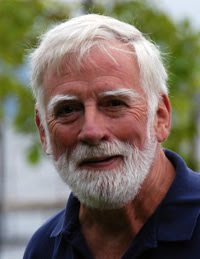
When you see a cardiac arrest, your brain fights you - "No, this isn't really happening" - and the circumstances fight you - "Dang! in CPR class the manikin didn't weigh very much and wasn't sitting in a deep chair. This blog deals with practical details and presents reports of "saves." Let me have your questions and comments - they will steer the course of this blog. This blog is brought to you by the volunteers at www.slicc.org
Tuesday, December 20, 2011


Teachers' CPR saves Richland student who collapsed
The Associated Press | 12/19/11 4:29 PM
Doctors say a Richland High School student who collapsed likely owes his life to two teachers who provided CPR and the athletic director who showed up with a defibrillator.
Principal Tim Praino says teachers John Bittinger and Paul Staley performed CPR on Jeremy Brewer while Mike Edwards administered the shock to his heart.
The ninth-grader collapsed Friday while running around outside school with friends during lunch. He was taken to Kadlec Regional Medical Center in critical condition and then flown to Children's hospital in Seattle.
Praino wrote on the school website Sunday that Jeremy's father said he was talking with his parents and nurses. He had no memory of what happened to him. He'll be monitored for a few days to try to determine why his heart stopped.
Read more at the Washington Examiner: http://washingtonexaminer.com/news/2011/12/teachers-cpr-saves-richland-student-who-collapsed/2017586#ixzz1h3eBHPjN
Doctors say a Richland High School student who collapsed likely owes his life to two teachers who provided CPR and the athletic director who showed up with a defibrillator.
Principal Tim Praino says teachers John Bittinger and Paul Staley performed CPR on Jeremy Brewer while Mike Edwards administered the shock to his heart.
The ninth-grader collapsed Friday while running around outside school with friends during lunch. He was taken to Kadlec Regional Medical Center in critical condition and then flown to Children's hospital in Seattle.
Praino wrote on the school website Sunday that Jeremy's father said he was talking with his parents and nurses. He had no memory of what happened to him. He'll be monitored for a few days to try to determine why his heart stopped.
Read more at the Washington Examiner: http://washingtonexaminer.com/news/2011/12/teachers-cpr-saves-richland-student-who-collapsed/2017586#ixzz1h3eBHPjN
Tuesday, December 13, 2011
Teen Saves Elderly Man's Life At Bowling Alley
Updated: Tuesday, 13 Dec 2011, 5:45 AM EST
Published : Monday, 12 Dec 2011, 10:23 PM EST
MYFOXNY.COM -
A quick-thinking New Jersey teenager saved an elderly man's life when he collapsed at a bowing alley
Christa Fairclough was bowing with her family at Rockaway Lanes in Rockaway last Friday when she saw him go down in the lane next to her.
She rushed over and gave the man CPR.
"He wasn't breathing. His face was purple," Fairclough said. "I was like, 'this man needs help'. I gave him two breaths, 30 compressions."
The man started breathing and survived.
"If it had been a few more minutes, the patient might not have made it," Rockaway Police Sgt. Michael Gosden said.
The high school junior had just learned CPR in school.
"Just three days ago we started adult/child CPR," Fairclough's health teacher Richter Grillo said. "We do the physical testing and the written exam."
As for Fairclough, she says, "It just kind of came to me in the moment."
Police say the elderly man, whose name has not been released, is still in the hospital in a critical care unit.
Read More
Published : Monday, 12 Dec 2011, 10:23 PM EST
MYFOXNY.COM -
A quick-thinking New Jersey teenager saved an elderly man's life when he collapsed at a bowing alley
Christa Fairclough was bowing with her family at Rockaway Lanes in Rockaway last Friday when she saw him go down in the lane next to her.
She rushed over and gave the man CPR.
"He wasn't breathing. His face was purple," Fairclough said. "I was like, 'this man needs help'. I gave him two breaths, 30 compressions."
The man started breathing and survived.
"If it had been a few more minutes, the patient might not have made it," Rockaway Police Sgt. Michael Gosden said.
The high school junior had just learned CPR in school.
"Just three days ago we started adult/child CPR," Fairclough's health teacher Richter Grillo said. "We do the physical testing and the written exam."
As for Fairclough, she says, "It just kind of came to me in the moment."
Police say the elderly man, whose name has not been released, is still in the hospital in a critical care unit.
Read More
Wednesday, December 7, 2011
School staff revive teen who suffered cardiac arrest in gym class
CYNTHIA REASON|Dec 07, 2011 - 7:59 AM
Group nominated for EMS Citizen Award
Six staff members at Silverthorn Collegiate Institute are being touted as heroes for saving the life of a young student who collapsed from a sudden cardiac arrest last Wednesday in gym class.
Teachers Sharon McConnell, Sean King and Norm Petterson, along with the school's principal, Sam Iskandar, vice principal, Tim Brethour, and hall monitor, Linda Armstrong, have all been nominated for Toronto EMS's Citizen Award for their parts in reviving a 17-year-old male student with the school's automated external defibrillator (AED).
"They did a fabulous job - perfect to a tee," said Gayle Pollock, commander of Toronto EMS's Cardiac Safe City program. "It definitely went the way that you want a sudden cardiac arrest to happen. They did everything perfectly."
It all started last Wednesday morning shortly after 10:30 a.m.
Just a week and a half into her new job at Silverthorn, McConnell had a class of Grade 12s divided into two groups, each playing four-on-four basketball in the school's main gym. Out of the corner of her eye, McConnell saw the boy, who asked that his name not be used, holding his arm.
"Then he kind of started walking backwards from the game. He had been playing basketball all morning, so I thought maybe he needed a drink or a rest. But then he went stiff and fell backwards," recalled McConnell, a longtime lifeguard well versed in emergency first aid.
At the very same time, King was walking through the gym. Ironically, he was teaching his Grade 9 class cardiopulmonary resuscitation (CPR) at the time, and was headed to pick up the school's demonstration AED when he saw the student collapse.
Both teachers rushed to the boy's side.
"He was lying on the ground and his eyes were half open...but he wasn't responding," McConnell said. "So, I knelt down and asked 'Are you alright?' Then I saw his hand flinch and he started to shake."
McConnell's training kicked in, and she made sure the teen's head was protected while the seizure took it's course. After it was over, he recovered somewhat and tried to get up. Then a second seizure overtook him.
"Normally when a student collapses, you expect them to sort of snap back to it right away, but that wasn't happening," said King, who, at the time, was unaware the avid basketball player had a serious pre-existing heart condition.
While King ran to the main office to phone 911, Petterson cleared the gym of the remaining students, and Iskandar, Brethour and Armstrong were radioed to the scene.
By the time King returned, the second seizure had ended. He and McConnell then began checking for vitals.
"I didn't feel any air on my cheek, I couldn't see his chest moving up and down, and I couldn't hear him taking any breaths," McConnell remembered.
Moving quickly, the pair positioned the teen on his back, and McConnell began artificial respiration, while King continued looking for a pulse.
Iskandar, Brethour and Armstrong arrived on the scene and still no pulse could be found.
"As soon as we heard that there was no pulse, I went and got the defibrillator," Brethour said of the school's AED, which was located nearby.
King and Brethour then set about cutting off the boy's shirt and placing the defibrillator's pads on his chest, while AED-trained Armstrong stood calmly on relaying instructions, and Iskandar ran back to the office to parlay information to the 911 dispatcher.
Once the AED's pads were connected, the machine took over.
"I could hear the machine saying 'analyzing, analyzing'...Then it actually said, 'no pulse detected. Administer shock,'" McConnell said.
After Brethour pushed the flashing green button to administer the shock, the AED instructed that CPR should be started immediately. McConnell took up the task - one she'd never performed on a live person before.
The AED instructed her through about three or four cycles of 30 compressions to two breaths, after which McConnell and King both located a pulse - albeit a faint one.
Toronto Fire Services and EMS arrived very shortly thereafter, but McConnell remained at the student's side, holding his hand and reassuring him as paramedics readied him for his trip to the hospital.
"I just kept talking to him and saying things like 'this is what happening, this is who's here.' He was totally unconscious, but he could squeeze my hand if I asked him to," she said.
While Iskandar made the announcement for teachers to keep the hallways clear of students, police blocked off Burnhamthorpe to aid the paramedics' quick exit to Trillium Health Centre in Mississauga.
If not for their quick action, their student might have died, said Pollock: "Every minute counts with a cardiac arrest. With every passing minute the chance of survival decreases by 10 per cent."
This week, the boy remains in hospital as his doctors contemplate surgery to correct his heart disorder.
Both Iskandar and McConnell have gone to visit him at the hospital. While they said he's still a bit hazy and doesn't remember the day of his collapse and near death, he's doing much better - so much better, in fact, that his main concern was for his ruined T-shirt.
"He was asking 'what shirt was it, Miss? Oh no! Was it my Puma shirt?'" a laughing McConnell recalled of her visit last Friday.
Now that the student appears to be out of the woods, the staff who came to his rescue have had time to reflect on what happened - and what could have happened had they not intervened.
"I think it all sunk in to us later that evening that, you know, this young man nearly died right in front of us," Armstrong said. Calling their reaction to the cardiac arrest "a total team effort", all six are being lauded for maintaining a calm front in face of crisis.
"We felt they did an amazing job. Between their actions and the fact that they had an AED in the school and they were prepared to use it, everything went as it should have," Pollock said, noting that the use of an AED increases a victim's chance of survival up to 75 per cent. "They had emergency plans, they followed those plans, and it all had a great outcome."
Group nominated for EMS Citizen Award
Six staff members at Silverthorn Collegiate Institute are being touted as heroes for saving the life of a young student who collapsed from a sudden cardiac arrest last Wednesday in gym class.
Teachers Sharon McConnell, Sean King and Norm Petterson, along with the school's principal, Sam Iskandar, vice principal, Tim Brethour, and hall monitor, Linda Armstrong, have all been nominated for Toronto EMS's Citizen Award for their parts in reviving a 17-year-old male student with the school's automated external defibrillator (AED).
"They did a fabulous job - perfect to a tee," said Gayle Pollock, commander of Toronto EMS's Cardiac Safe City program. "It definitely went the way that you want a sudden cardiac arrest to happen. They did everything perfectly."
It all started last Wednesday morning shortly after 10:30 a.m.
Just a week and a half into her new job at Silverthorn, McConnell had a class of Grade 12s divided into two groups, each playing four-on-four basketball in the school's main gym. Out of the corner of her eye, McConnell saw the boy, who asked that his name not be used, holding his arm.
"Then he kind of started walking backwards from the game. He had been playing basketball all morning, so I thought maybe he needed a drink or a rest. But then he went stiff and fell backwards," recalled McConnell, a longtime lifeguard well versed in emergency first aid.
At the very same time, King was walking through the gym. Ironically, he was teaching his Grade 9 class cardiopulmonary resuscitation (CPR) at the time, and was headed to pick up the school's demonstration AED when he saw the student collapse.
Both teachers rushed to the boy's side.
"He was lying on the ground and his eyes were half open...but he wasn't responding," McConnell said. "So, I knelt down and asked 'Are you alright?' Then I saw his hand flinch and he started to shake."
McConnell's training kicked in, and she made sure the teen's head was protected while the seizure took it's course. After it was over, he recovered somewhat and tried to get up. Then a second seizure overtook him.
"Normally when a student collapses, you expect them to sort of snap back to it right away, but that wasn't happening," said King, who, at the time, was unaware the avid basketball player had a serious pre-existing heart condition.
While King ran to the main office to phone 911, Petterson cleared the gym of the remaining students, and Iskandar, Brethour and Armstrong were radioed to the scene.
By the time King returned, the second seizure had ended. He and McConnell then began checking for vitals.
"I didn't feel any air on my cheek, I couldn't see his chest moving up and down, and I couldn't hear him taking any breaths," McConnell remembered.
Moving quickly, the pair positioned the teen on his back, and McConnell began artificial respiration, while King continued looking for a pulse.
Iskandar, Brethour and Armstrong arrived on the scene and still no pulse could be found.
"As soon as we heard that there was no pulse, I went and got the defibrillator," Brethour said of the school's AED, which was located nearby.
King and Brethour then set about cutting off the boy's shirt and placing the defibrillator's pads on his chest, while AED-trained Armstrong stood calmly on relaying instructions, and Iskandar ran back to the office to parlay information to the 911 dispatcher.
Once the AED's pads were connected, the machine took over.
"I could hear the machine saying 'analyzing, analyzing'...Then it actually said, 'no pulse detected. Administer shock,'" McConnell said.
After Brethour pushed the flashing green button to administer the shock, the AED instructed that CPR should be started immediately. McConnell took up the task - one she'd never performed on a live person before.
The AED instructed her through about three or four cycles of 30 compressions to two breaths, after which McConnell and King both located a pulse - albeit a faint one.
Toronto Fire Services and EMS arrived very shortly thereafter, but McConnell remained at the student's side, holding his hand and reassuring him as paramedics readied him for his trip to the hospital.
"I just kept talking to him and saying things like 'this is what happening, this is who's here.' He was totally unconscious, but he could squeeze my hand if I asked him to," she said.
While Iskandar made the announcement for teachers to keep the hallways clear of students, police blocked off Burnhamthorpe to aid the paramedics' quick exit to Trillium Health Centre in Mississauga.
If not for their quick action, their student might have died, said Pollock: "Every minute counts with a cardiac arrest. With every passing minute the chance of survival decreases by 10 per cent."
This week, the boy remains in hospital as his doctors contemplate surgery to correct his heart disorder.
Both Iskandar and McConnell have gone to visit him at the hospital. While they said he's still a bit hazy and doesn't remember the day of his collapse and near death, he's doing much better - so much better, in fact, that his main concern was for his ruined T-shirt.
"He was asking 'what shirt was it, Miss? Oh no! Was it my Puma shirt?'" a laughing McConnell recalled of her visit last Friday.
Now that the student appears to be out of the woods, the staff who came to his rescue have had time to reflect on what happened - and what could have happened had they not intervened.
"I think it all sunk in to us later that evening that, you know, this young man nearly died right in front of us," Armstrong said. Calling their reaction to the cardiac arrest "a total team effort", all six are being lauded for maintaining a calm front in face of crisis.
"We felt they did an amazing job. Between their actions and the fact that they had an AED in the school and they were prepared to use it, everything went as it should have," Pollock said, noting that the use of an AED increases a victim's chance of survival up to 75 per cent. "They had emergency plans, they followed those plans, and it all had a great outcome."
Another save - (notice the symptoms)
“If you have the opportunity to take a CPR class, I recommend you do it,” Stephanie Jackson urges.
Stephanie Jackson speaks from experience. In April of this year, her CPR training saved the life of her own father in the family home.
“My mom and I are chatting in the kitchen, and she looks over and yells his name because he’s making a weird snoring noise. She just starts screaming, screaming, and I’m like ‘call 911,’” said Jackson.
With her father struggling to breathe, Stephanie applied basic CPR techniques for ten minutes until the paramedics arrived.
“The only thing I could think of was ‘this isn’t happening, and if it’s happening, then I better react, because no one else is stepping up,’” said Jackson.
And step up she did, saving her father’s life. Bob Jackson is alive today thanks to his daughter, Stephanie, and her knowledge of CPR.
“I have been trained in CPR since I was in high school… I always doubted myself, when I was doing the classes. I would always say ‘what if I don’t do it right, or what if I’m not doing it right?’ It clicks back in when it’s time. When it’s go time, your brain pulls it out,” said Jackson.
Now Stephanie has no doubt, and is truly a real hero.
“Stephanie came through for me… I thank God, I’m grateful to be here. I know if it weren’t for Stephanie, I wouldn’t be,” said her father.
“I was taught how to do something, I needed to do it at that moment, so I did it. I don’t really feel like a hero, but I feel like I did something good… It’s really emotional, that day. It’s hard to think about it, because, what if I did something wrong?,” said Jackson.
Because she did everything right, Stephanie Jackson is the 2011 Red Cross Adult Good Samaritan Real Hero.
Stephanie Jackson speaks from experience. In April of this year, her CPR training saved the life of her own father in the family home.
“My mom and I are chatting in the kitchen, and she looks over and yells his name because he’s making a weird snoring noise. She just starts screaming, screaming, and I’m like ‘call 911,’” said Jackson.
With her father struggling to breathe, Stephanie applied basic CPR techniques for ten minutes until the paramedics arrived.
“The only thing I could think of was ‘this isn’t happening, and if it’s happening, then I better react, because no one else is stepping up,’” said Jackson.
And step up she did, saving her father’s life. Bob Jackson is alive today thanks to his daughter, Stephanie, and her knowledge of CPR.
“I have been trained in CPR since I was in high school… I always doubted myself, when I was doing the classes. I would always say ‘what if I don’t do it right, or what if I’m not doing it right?’ It clicks back in when it’s time. When it’s go time, your brain pulls it out,” said Jackson.
Now Stephanie has no doubt, and is truly a real hero.
“Stephanie came through for me… I thank God, I’m grateful to be here. I know if it weren’t for Stephanie, I wouldn’t be,” said her father.
“I was taught how to do something, I needed to do it at that moment, so I did it. I don’t really feel like a hero, but I feel like I did something good… It’s really emotional, that day. It’s hard to think about it, because, what if I did something wrong?,” said Jackson.
Because she did everything right, Stephanie Jackson is the 2011 Red Cross Adult Good Samaritan Real Hero.
Deep breath time...
Here's a heart warming story that was on the wires this morning...
_______
Scout recognized for saving great-grandmother's life
It was a gutsy move for 10-year-old Lane Hardin to tell his grandmother that she was performing CPR incorrectly on his great-grandmother, who was having a stroke.
But the Peaster student’s calm thinking, courage and thorough knowledge of the live-saving method helped save the woman’s life when he stepped in to assist his grandmother as they waited for an ambulance to arrive.
When Lane learned CPR in the third grade through Cub Scouts, he didn’t think he’d have to use it.
He definitely couldn’t expect to earn a prestigious and rare life-saving award by the age of 11.
______
Heart warming? More like heartburn.
In the course of teaching hundreds of Bystander CPR classes over the past five years, I can count on one hand the number of classes where someone wasn't confused about heart attacks, cardiac arrests, and strokes.
That's understandable, but the reporters and editors aren't helping.
A heart attack happens when a coronary artery on the suface of the heart becomes blocked, thus cutting off the blood flow to the heart muscle that artery serves, and leading to the death of that portion of the heart muscle. Get it fixed fast, or it could lead to death or permanent disability.
A stroke happens either when an artery feeding the brain becomes blocked (it's like a heart attack, but in the brain) or (less commonly) when an artery feeding the brain ruptures. Get it fixed fast, or the symptoms you are experiencing could become permanent and worse. Don't ignore a stroke that goes away in 15 minutes.
A cardiac arrest happens when the heart suddenly stops pumping blood. A person in cardiac arrest is clinically dead and will most likely remain so unless those people who saw it happen (a) call 911, (b) begin chest compressions, and (c) get an AED and use it!
Tell me again why someone was performing CPR on a stroke patient? Most likely, the person suffered a cardiac arrest, and the reporter or some editor thinks a cardiac arrest is a stroke.
Why is this important? Hopefully, education will teach enough people what they need to do and why when people suffer a cardiac arrest or a stroke, thus leading to significant improvement in death and disability rates. A campaign to educate people isn't helped by calling things by the wrong name.
Arrrrrgh!
_______
Scout recognized for saving great-grandmother's life
It was a gutsy move for 10-year-old Lane Hardin to tell his grandmother that she was performing CPR incorrectly on his great-grandmother, who was having a stroke.
But the Peaster student’s calm thinking, courage and thorough knowledge of the live-saving method helped save the woman’s life when he stepped in to assist his grandmother as they waited for an ambulance to arrive.
When Lane learned CPR in the third grade through Cub Scouts, he didn’t think he’d have to use it.
He definitely couldn’t expect to earn a prestigious and rare life-saving award by the age of 11.
______
Heart warming? More like heartburn.
In the course of teaching hundreds of Bystander CPR classes over the past five years, I can count on one hand the number of classes where someone wasn't confused about heart attacks, cardiac arrests, and strokes.
That's understandable, but the reporters and editors aren't helping.
A heart attack happens when a coronary artery on the suface of the heart becomes blocked, thus cutting off the blood flow to the heart muscle that artery serves, and leading to the death of that portion of the heart muscle. Get it fixed fast, or it could lead to death or permanent disability.
A stroke happens either when an artery feeding the brain becomes blocked (it's like a heart attack, but in the brain) or (less commonly) when an artery feeding the brain ruptures. Get it fixed fast, or the symptoms you are experiencing could become permanent and worse. Don't ignore a stroke that goes away in 15 minutes.
A cardiac arrest happens when the heart suddenly stops pumping blood. A person in cardiac arrest is clinically dead and will most likely remain so unless those people who saw it happen (a) call 911, (b) begin chest compressions, and (c) get an AED and use it!
Tell me again why someone was performing CPR on a stroke patient? Most likely, the person suffered a cardiac arrest, and the reporter or some editor thinks a cardiac arrest is a stroke.
Why is this important? Hopefully, education will teach enough people what they need to do and why when people suffer a cardiac arrest or a stroke, thus leading to significant improvement in death and disability rates. A campaign to educate people isn't helped by calling things by the wrong name.
Arrrrrgh!
Monday, December 5, 2011
Girl, Friend Save Mom With CPR Learned on ‘Grey’s Anatomy’
A mother of three from Sheboygan, Wis., credits her 10-year-old daughter, her daughter’s friend and “Grey’s Anatomy” with saving her life.
When 36-year-old Kandace Seyferth collapsed from a severe asthma attack Nov. 25, her daughter Madisyn knew exactly what to do. She quickly dialed 911 and started mouth-to-mouth resuscitation while her friend, 12-year-old Katelynn Vreeke, performed chest compressions.
Where did these young girls learn how to give lifesaving CPR? From watching ABC’s medical drama “Grey’s Anatomy,” Seyferth said. “We’ve watched it every week for the past eight years,” Seyferth told ABCNews.com. ”When my fiance asked her how she knew what to do, she said, ‘I’ve seen it on there 100 times.’”
Paramedics arrived four minutes later and took Seyferth to a nearby hospital.
“The paramedics saw them doing it, and they were just floored,” said Seyferth. “They’ve never taken classes; they just did what they saw. It’s amazing.”
Seyferth, who also has two sons, one 13 years old and the other 17 months old, said she was shocked by the young girls’ quick and calm response.
“My mind’s just blown,” she said. “Most adults I know would panic. They kept calm.”
Fire chief Jeff Hermann said the outcome could have been different had the girls not started CPR.
“These kids did what they were supposed to do, and they should be commended for the speed of their actions as well as the actions themselves,” Hermann told the Sheboygan Press.
Seyferth developed asthma symptoms after battling severe pneumonia last year.
“I’ve never felt the same since,” she said, describing the infection that landed her in intensive care for 21 days.
Seyferth carries an albuterol inhaler at all times. But they day she collapsed, it didn’t work. She’s visiting a pulmonologist Tuesday for lung testing, and hopes to get some answers.
In the meantime, Seyferth said the incident strengthened the already strong bond between her and her daughter.
“She’s getting an extra-special Christmas present this year,” she said. “If they weren’t around, I don’t know what would have happened. I wouldn’t be here, that’s for sure.”
When 36-year-old Kandace Seyferth collapsed from a severe asthma attack Nov. 25, her daughter Madisyn knew exactly what to do. She quickly dialed 911 and started mouth-to-mouth resuscitation while her friend, 12-year-old Katelynn Vreeke, performed chest compressions.
Where did these young girls learn how to give lifesaving CPR? From watching ABC’s medical drama “Grey’s Anatomy,” Seyferth said. “We’ve watched it every week for the past eight years,” Seyferth told ABCNews.com. ”When my fiance asked her how she knew what to do, she said, ‘I’ve seen it on there 100 times.’”
Paramedics arrived four minutes later and took Seyferth to a nearby hospital.
“The paramedics saw them doing it, and they were just floored,” said Seyferth. “They’ve never taken classes; they just did what they saw. It’s amazing.”
Seyferth, who also has two sons, one 13 years old and the other 17 months old, said she was shocked by the young girls’ quick and calm response.
“My mind’s just blown,” she said. “Most adults I know would panic. They kept calm.”
Fire chief Jeff Hermann said the outcome could have been different had the girls not started CPR.
“These kids did what they were supposed to do, and they should be commended for the speed of their actions as well as the actions themselves,” Hermann told the Sheboygan Press.
Seyferth developed asthma symptoms after battling severe pneumonia last year.
“I’ve never felt the same since,” she said, describing the infection that landed her in intensive care for 21 days.
Seyferth carries an albuterol inhaler at all times. But they day she collapsed, it didn’t work. She’s visiting a pulmonologist Tuesday for lung testing, and hopes to get some answers.
In the meantime, Seyferth said the incident strengthened the already strong bond between her and her daughter.
“She’s getting an extra-special Christmas present this year,” she said. “If they weren’t around, I don’t know what would have happened. I wouldn’t be here, that’s for sure.”
Subscribe to:
Posts (Atom)