Here's the results of a study recently reported by the CDC. What it suggests is that adolescents are dying / becoming disabled at an increasing rate because of hypertension and diabetes. Guess where the increased type 2 diabetes comes from. Send an angry letter to your favorite fast food store.
My view is that parents have a responsibility to take a strong stand when their children engage in unhealthy behaviors.
Yes, this is a blog about Practical CPR and treatment of sudden cardiac arrests, but the sorts of behaviors that cause the increase in strokes in young people are the same sort of behaviors that cause heart attacks and sudden cardiac arrests in young people, so this study is just one more reason for parents to control the factors that lead to Sudden Cardiac Arrests.
Here's the synopsis of the study:
______________
A new study indicates that the stroke risk among young people, children and adolescences in the U.S., is increasing. Previously, strokes appeared to be more common among older people.
According to researchers at the U.S. Centers for Disease Control and Prevention, in the study, they examined hospital data for about eight million patients per year between 1995 and 2008. Between 1995 and 2008, the number of hospitalizations for strokes increased by 37 percent for people between 15 years old and 44 years old.
More specifically, one in three ischemic stroke patients were between 15 years old and 34 years old, and over half of those people between 35 years old and 44 years old had high blood pressure. Additionally, a fourth of the patients between 15 years old and 34 years old who experienced an ischemic stroke also had diabetes.
When comparing the stroke rate of ischemic stroke, due to blood clots, and hemorrhagic stroke, due to brain bleeding, hemorrhagic stroke rates decreased for all age groups, except for patients between five years old and 14 years old. Yet, the increase in the ischemic stroke rate exceeds the hemorrhagic stroke rate decrease. The rate of ischemic stroke increased by 31 percent in patients between five years old and 14 years old, from 3.2 strokes per 10,000 hospital cases to 4.2 per 10,000.
Interestingly, the stroke risk appears to be higher in men than in women.
The study also found a higher prevalence of hypertension, diabetes, obesity, and tobacco use among this population group for the 14-year study period. This study conclusion suggests that public health initiatives are needed to reduce the prevalence of risk factors for stroke among younger people.
According to the American Heart Association, stroke is the third leading cause of death in the U.S. and 87 percent of all cases are attributed to ischemic stroke. Ischemic stroke occurs when blood flow to the brain is blocked by blood clots or build-up of fatty deposits called plaque inside blood vessels.
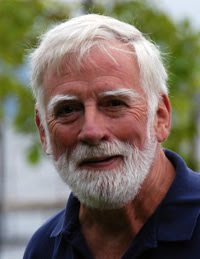
When you see a cardiac arrest, your brain fights you - "No, this isn't really happening" - and the circumstances fight you - "Dang! in CPR class the manikin didn't weigh very much and wasn't sitting in a deep chair. This blog deals with practical details and presents reports of "saves." Let me have your questions and comments - they will steer the course of this blog. This blog is brought to you by the volunteers at www.slicc.org
Saturday, September 3, 2011


Friday, September 2, 2011
DIFIBRILlATOR USED, TEEN SAVED
OK, folks, this is the way it's supposed to work. You have a defibrillator at every sporting event and practice, and when someone dies of sudden cardiac arrest, you use it.
It's not high tech. Do it.
AMERICAN FALLS — Quick-thinking coaches and a school's new defibrillator helped save the life of an American Falls High School athlete after the boy collapsed at practice. Superintendent Ron Bolinger said 17-year-old Ross Palmer, a star on the football team, collapsed near the end of practice Tuesday night. The coaching staff couldn't find a pulse and started CPR.
Monday, August 29, 2011
There's a large problem with 'presenting rhythm' statistics.
Here's the deal...
When you have a sudden cardiac arrest, your heart has already progressed from a perfusing rhythm to a non-perfusing rhythm.
i.e., your heart is not pumping blood to your brain,
The tracking systems report the "initial rhythm" as whatever the rhythm was when the first person with an AED or Cardiac Monitor got their gear wired to the patient.
If the rhythm was "shockable" and the device was an AED, we know that it was one of two or more well-known rhythms.
If the rhythm was described in terms of the specific rhythm, the device used was a cardiac monitor.
The officially recorded presenting rhythm is reported as "shockable" if an AED fired a blast and as whatever the paramedic on scene saw if the EMTs were the first on the scene and attached a heart monitor.
Here's where the problem comes in: If the EMT's / Paramedics took a little while to get there, the initial presenting rhythm might have been VF at the time of the arrest, but a lot different at the time the EMT's arrived.
Bob
When you have a sudden cardiac arrest, your heart has already progressed from a perfusing rhythm to a non-perfusing rhythm.
i.e., your heart is not pumping blood to your brain,
The tracking systems report the "initial rhythm" as whatever the rhythm was when the first person with an AED or Cardiac Monitor got their gear wired to the patient.
If the rhythm was "shockable" and the device was an AED, we know that it was one of two or more well-known rhythms.
If the rhythm was described in terms of the specific rhythm, the device used was a cardiac monitor.
The officially recorded presenting rhythm is reported as "shockable" if an AED fired a blast and as whatever the paramedic on scene saw if the EMTs were the first on the scene and attached a heart monitor.
Here's where the problem comes in: If the EMT's / Paramedics took a little while to get there, the initial presenting rhythm might have been VF at the time of the arrest, but a lot different at the time the EMT's arrived.
Bob
Wednesday, August 24, 2011
Yawn - another one.
by Michael Berk, KGW Sports
Posted on August 24, 2011 at 6:13 AM
Updated today at 6:47 AM
PORTLAND -- Hayward Demison says he’s “dying to be great” this season.
That’s an interesting choice of words given what this young man experienced 11 months ago.
Last September, Demison scored the winning touchdown in Central Catholic’s win over Canby high school. It turned out that was only his first heart-stopping moment of the night.
“I went to the sideline and everything went black,” he said.
Everything went black because Demison was dying. Some might argue he did die when he went into full cardiac arrest.[sic]
“I walked over and saw him on the ground and they’re giving him C-P-R,” said Central head coach Steve Pyne.
Demison was brought back to life by a nurse who happened to be in attendance at the game. Their story was featured on NBC’s TODAY show. The story is now even more amazing as Demison is on the football field again, grinding it out during two-a-day practices to get ready for the season.
Cleared by physicians after surgery to repair his damaged coronary artery, Demison has a new perspective on life.
“He’s very focused on the bigger things in life,” said Pyne. “It’s been amazing to see him come though this.”
Pyne said he wasn’t overcome with emotion until the week after Demison’s heart attack, when the running back led his teammates onto the field.
“I literally dropped to a knee and cried, and thanked God he was still here with us,” the coach said.
“I have a big heart, it’s fixed now, I feel alive and healthy,” Demison said, “…and I’m dying to be great.”
There’s that expression again. Anyone who has followed his story would argue Hayward Demison has already accomplished that.
Posted on August 24, 2011 at 6:13 AM
Updated today at 6:47 AM
PORTLAND -- Hayward Demison says he’s “dying to be great” this season.
That’s an interesting choice of words given what this young man experienced 11 months ago.
Last September, Demison scored the winning touchdown in Central Catholic’s win over Canby high school. It turned out that was only his first heart-stopping moment of the night.
“I went to the sideline and everything went black,” he said.
Everything went black because Demison was dying. Some might argue he did die when he went into full cardiac arrest.[sic]
“I walked over and saw him on the ground and they’re giving him C-P-R,” said Central head coach Steve Pyne.
Demison was brought back to life by a nurse who happened to be in attendance at the game. Their story was featured on NBC’s TODAY show. The story is now even more amazing as Demison is on the football field again, grinding it out during two-a-day practices to get ready for the season.
Cleared by physicians after surgery to repair his damaged coronary artery, Demison has a new perspective on life.
“He’s very focused on the bigger things in life,” said Pyne. “It’s been amazing to see him come though this.”
Pyne said he wasn’t overcome with emotion until the week after Demison’s heart attack, when the running back led his teammates onto the field.
“I literally dropped to a knee and cried, and thanked God he was still here with us,” the coach said.
“I have a big heart, it’s fixed now, I feel alive and healthy,” Demison said, “…and I’m dying to be great.”
There’s that expression again. Anyone who has followed his story would argue Hayward Demison has already accomplished that.
Tuesday, August 23, 2011
There are sometimes a few rusty and missing links in the Chain of Survival
There's a nice, tidy guide to maximizing resuscitation success when someone has a sudden cardiac arrest: (1) immediately recognize the arrest for what it is and activate the 911 emergency response network; (2) immediately begin chest compressions; (3) promptly defibrillate the victim; (4) get the victim under Advanced Life Support care; and (5) provide early post-resuscitative care. It's called the Chain of Survival.
In some parts of the real world, however, there are a surprising number of rusty or missing links. What goes wrong?
Calling 911 can be a problem. Don't laugh - this really happens - people sometimes mess up when they try to call 911. They speak too loudly and rapidly, thus needing to repeat themselves to be understood, they forget to tell the 911 operator where they are, sometimes they get involved in an unnecessarily long conversation with the 911 operator, and sometimes they hang up before the 911 system has the information it needs. What needs to be done when the 911 call is answered is to say (for example) "we are at 17 Smithtown Road in office 651. We have a non-responsive forty-five year old female, She is not breathing. We have begun CPR. We need an ambulance. Did you copy that?" And don't hang up!
CPR can be a problem:
• Not enough people are current in their knowledge of CPR.
• Not enough people who are current in their knowledge of CPR will actually use it before the ambulance arrives.
• The quality of CPR performed by both Bystanders and Health Care Providers is not uniformly good. The issues are inadequate compression depth, too many interruptions, interruption(s) that are longer than 10 seconds, too long a period between cessation of chest compressions and delivery of the shock from an AED, and failure to immediately resume chest compressions after shock delivery.
AED's are often a problem: there aren't enough of them where they need to be.
Gaining access to Advanced Life Support can be a problem, because not all EMS responses to cardiac arrest calls can be made by an ALS unit.
Early post-resuscitative care can be a problem in that not all hospitals are staffed 24 x 7 with the professionals required to deal with a resuscitated arrest patient. Not all hospitals have cath labs, let alone one that can be ready for the patient by the time the patient gets there. And not all EMS units and hospitals are equipped to treat a resuscitated comatose SCA victim with therapeutic hypothermia.
The good news is that we have a road map, we can segment the problem and attack it in pieces, and a lot of people are doing just that. Improvements are being made. This is not a bleak picture. "True Bleakness" is when you have a bad situation but no clue as to how to fix it.
The other good news is that you can do some touch-up on your personal chain of survival and those of your family members and friends. Make sure you are current in Bystander CPR, and make sure (for your sake) that your family and friends are, too. Go to www.slicc.org/ClassVideo/ and download a 35 minute video that covers Bystander CPR, AED use, resolving choking emergencies and recognizing when someone is having a stroke. It's low budget. It's free. If you are prompted for an access code, use 2020.
There is a one in seven chance that you're going to need the CPR skills at least once in your lifetime, and when you do, it's most likely going to be on a family member or friend. Thirty-five minutes.
Thanks for being part of the solution.
In some parts of the real world, however, there are a surprising number of rusty or missing links. What goes wrong?
Calling 911 can be a problem. Don't laugh - this really happens - people sometimes mess up when they try to call 911. They speak too loudly and rapidly, thus needing to repeat themselves to be understood, they forget to tell the 911 operator where they are, sometimes they get involved in an unnecessarily long conversation with the 911 operator, and sometimes they hang up before the 911 system has the information it needs. What needs to be done when the 911 call is answered is to say (for example) "we are at 17 Smithtown Road in office 651. We have a non-responsive forty-five year old female, She is not breathing. We have begun CPR. We need an ambulance. Did you copy that?" And don't hang up!
CPR can be a problem:
• Not enough people are current in their knowledge of CPR.
• Not enough people who are current in their knowledge of CPR will actually use it before the ambulance arrives.
• The quality of CPR performed by both Bystanders and Health Care Providers is not uniformly good. The issues are inadequate compression depth, too many interruptions, interruption(s) that are longer than 10 seconds, too long a period between cessation of chest compressions and delivery of the shock from an AED, and failure to immediately resume chest compressions after shock delivery.
AED's are often a problem: there aren't enough of them where they need to be.
Gaining access to Advanced Life Support can be a problem, because not all EMS responses to cardiac arrest calls can be made by an ALS unit.
Early post-resuscitative care can be a problem in that not all hospitals are staffed 24 x 7 with the professionals required to deal with a resuscitated arrest patient. Not all hospitals have cath labs, let alone one that can be ready for the patient by the time the patient gets there. And not all EMS units and hospitals are equipped to treat a resuscitated comatose SCA victim with therapeutic hypothermia.
The good news is that we have a road map, we can segment the problem and attack it in pieces, and a lot of people are doing just that. Improvements are being made. This is not a bleak picture. "True Bleakness" is when you have a bad situation but no clue as to how to fix it.
The other good news is that you can do some touch-up on your personal chain of survival and those of your family members and friends. Make sure you are current in Bystander CPR, and make sure (for your sake) that your family and friends are, too. Go to www.slicc.org/ClassVideo/ and download a 35 minute video that covers Bystander CPR, AED use, resolving choking emergencies and recognizing when someone is having a stroke. It's low budget. It's free. If you are prompted for an access code, use 2020.
There is a one in seven chance that you're going to need the CPR skills at least once in your lifetime, and when you do, it's most likely going to be on a family member or friend. Thirty-five minutes.
Thanks for being part of the solution.
Monday, August 22, 2011
What's wrong with this story? See the next-to-last paragraph.
Train Passengers Perform CPR After Man Collapses at West Newton Station
After a man collapsed on the platform in West Newton, Commuter Rail passengers stepped in to help out.
By Melanie Graham
It was an exciting commute for a few passengers on the Framingham/Worcester Commuter Rail line this morning.
David Perry, an Ashland resident, as well as Framingham resident Dean Bonis, helped perform CPR on a man at the West Newton station after the man collapsed and went into cardiac arrest.
"I knew I had the training and I knew what to do," Perry told Newton Patch.
Newton Fire Chief Paul Chagnon told Newton Patch this morning that the man was reported to be "awake and alert" in the hospital.
As the train pulled into the West Newton stop around 8 a.m., Perry and Bonis explained that someone ran onto their cars asking if there was a doctor available, as a man had just collapsed on the platform.
Perry, who is a trained CPR instructor, went out to the platform and met another man who had already started chest compressions.
Soon after, Bonis, who is originally from Auburdale, took over the chest compressions on the platform until EMS arrived. Bonis said he is an EMT in New York and works in Boston at Children's Hospital.
"It was a classic example of everyone coming together for bystander CPR," Perry said.
Perry said he received his CPR training and teacher certification a few years ago through his job in downtown Boston, where he works as an environmental engineer. With his certification, he says he mostly trains other people in his workplace and helps coordinate office safety.
According to Chagnon, the 58-year old male collapsed on the platform and was shocked with a defibrillator one time by EMS crews and resuscitated in the ambulance.
Scanner reports indicated the man was transported to Newton-Wellesley Hospital. Chagnon said this morning the man was transferred to a hospital in Boston, but could not indicate which hospital.
This morning's incident was not the first bystander CPR situation for Perry, though. A few years ago, Perry said he was stuck in traffic in the Lincoln Tunnel on his way to New York City when he saw a man kneeling by the side of the road. After getting out of the car to see what was wrong, Perry found out the man was having a heart attack and stepped in to help out.
During the Lincoln Tunnel incident, Perry recalls the ambulance "taking forever." But today, he said EMS crews were on the scene in no time.
Andrea Wheeler, a spokesperson for the Massachusetts Bay Commuter Rail, said the train conductors did not need to provide much assistance as Newton EMS was on scene shortly after the train arrived.
Perry noted that the train conductors did not need to use the Automated External Defibrillator (AED) on the train, as the bystander CPR and fast EMS response jumped to the task quickly and eventually restored a pulse to the patient.
"It speaks well to the mentality of people out there willing to step up and help out," Perry said.
_________________________
[Blogger's note: I'll bet the conductors could have gotten the on-train AED to the victim faster than the EMT's got to the victim.]
After a man collapsed on the platform in West Newton, Commuter Rail passengers stepped in to help out.
By Melanie Graham
It was an exciting commute for a few passengers on the Framingham/Worcester Commuter Rail line this morning.
David Perry, an Ashland resident, as well as Framingham resident Dean Bonis, helped perform CPR on a man at the West Newton station after the man collapsed and went into cardiac arrest.
"I knew I had the training and I knew what to do," Perry told Newton Patch.
Newton Fire Chief Paul Chagnon told Newton Patch this morning that the man was reported to be "awake and alert" in the hospital.
As the train pulled into the West Newton stop around 8 a.m., Perry and Bonis explained that someone ran onto their cars asking if there was a doctor available, as a man had just collapsed on the platform.
Perry, who is a trained CPR instructor, went out to the platform and met another man who had already started chest compressions.
Soon after, Bonis, who is originally from Auburdale, took over the chest compressions on the platform until EMS arrived. Bonis said he is an EMT in New York and works in Boston at Children's Hospital.
"It was a classic example of everyone coming together for bystander CPR," Perry said.
Perry said he received his CPR training and teacher certification a few years ago through his job in downtown Boston, where he works as an environmental engineer. With his certification, he says he mostly trains other people in his workplace and helps coordinate office safety.
According to Chagnon, the 58-year old male collapsed on the platform and was shocked with a defibrillator one time by EMS crews and resuscitated in the ambulance.
Scanner reports indicated the man was transported to Newton-Wellesley Hospital. Chagnon said this morning the man was transferred to a hospital in Boston, but could not indicate which hospital.
This morning's incident was not the first bystander CPR situation for Perry, though. A few years ago, Perry said he was stuck in traffic in the Lincoln Tunnel on his way to New York City when he saw a man kneeling by the side of the road. After getting out of the car to see what was wrong, Perry found out the man was having a heart attack and stepped in to help out.
During the Lincoln Tunnel incident, Perry recalls the ambulance "taking forever." But today, he said EMS crews were on the scene in no time.
Andrea Wheeler, a spokesperson for the Massachusetts Bay Commuter Rail, said the train conductors did not need to provide much assistance as Newton EMS was on scene shortly after the train arrived.
Perry noted that the train conductors did not need to use the Automated External Defibrillator (AED) on the train, as the bystander CPR and fast EMS response jumped to the task quickly and eventually restored a pulse to the patient.
"It speaks well to the mentality of people out there willing to step up and help out," Perry said.
_________________________
[Blogger's note: I'll bet the conductors could have gotten the on-train AED to the victim faster than the EMT's got to the victim.]
Friday, August 19, 2011
Agnes Cinat died and later thanked paramedics
WINDSOR, Ont. -- Agnes Cinat died the night the Canadian and American women’s hockey teams faced off for the Olympic gold medal game.
On Friday, the 81-year-old grandmother was on hand to talk about it during a reunion of emergency workers and the patients they helped revive.
Cinat said that she was watching the game on television Feb. 25, 2010, when she collapsed.
Her daughter Mary-Lou Cinat-Tino had been popping popcorn in the kitchen when Cinat called to her in a strange voice.
Cinat-Tino, a nurse, performed CPR before paramedics arrived. Paramedics shocked Cinat many times with a defibrillator and gave her several injections of drugs to get her heart pumping, said paramedic Mona Hansen, who had attended Assumption high school with one of Cinat’s daughters.
“My heart just dropped,” Hansen said of recognizing her patient. “It was so hard working on her.”
It took more than 15 minutes to revive Cinat.
“We weren’t sure how it would turn out,” paramedic Dawn Newman said. “When we heard she made it, we were shocked.”
“Usually when we have to work that hard on a patient, there aren’t good results,” Hansen said Friday at the Essex-Windsor EMS’s first survivors’ day, an event to connect patients who survived cardiac arrest with paramedics, dispatchers and firefighters who helped save them.
Newman, who had worked more than six years as a paramedic, said Cinat was the first of her cardiac arrest patients to be revived. It was the second for Hansen.
Barely five per cent of patients who exhibit no vital signs are brought back to life, said Randy Mellow, chief of the Essex-Windsor EMS. If a patient receives CPR, which is comprised of chest compressions and breaths for the distressed patient, the chance of survival jumps 10-fold, said Dr. Paul Bradford, who works in the emergency room at Hotel-Dieu Grace Hospital. Only 20 people in Essex County recovered from not having any vital signs in 2010. Ten attended Friday’s celebration.
Thom Racovitis, owner of Tunnel Bar-B-Q, collapsed in the parking lot of the restaurant on Oct. 26. An employee performed CPR until paramedics arrived. Paramedic Prentice Scott recognized Racovitis right away. It had been 13 years since Racovitis gave the paramedic his first job in Windsor, delivering baked goods. On his first day of work he gave Racovitis his two-weeks’ notice because he got his EMS job.
“I haven’t saved anyone else in 13 years. Isn’t that karma?” Scott said.
Every day since his recovery and every time he saw an ambulance or a paramedic, Racovitis wondered if that was the person who had saved his life.
Getting a chance to meet Scott and the other colleagues who saved Racovitis gave the family a chance for some closure, said Marilyn Racovitis, his wife.
On July 17 2010, Sasha Suvajdzin, 37, jumped into his cousin’s above-ground pool and struck his head on the bottom.
“I heard a crunch and I couldn’t move,” said Suvajdzin, a former tool and die maker. With a broken neck, Suvajdzin was paralyzed, unable to move his arms or legs. His cousin was in the pool with him and he thought Suvajdzin was fooling around. His cousin even brushed against him, but Suvajdzin was unable to touch him to alert him to his distress.
“I was holding my breath and I couldn’t anymore,” he said. His mouth popped open and his lungs filled with water.
“I drowned,” he said. His cousin pulled Suvajdzin out of the water and performed CPR — water gushed from Suvajdzin’s mouth like a fountain.
Suvajdzin was revived by paramedics before he was loaded into an ambulance.
After months of rehabilitation he has full use of his body, although he said his hands don’t work properly.
“It’s a chance at a second life,” said Suvajdzin, who has a son. “I have a chance to do it right.”
Even if a patient is revived, the vast majority die after arriving at hospital because resuscitation is done too late.
“The body might survive, but not the brain,” Bradford said. The window to revive a patient with no vital signs is very small and it takes a minimum of four to six minutes for paramedics or firefighters to respond to an emergency call, Mellow said.
Newman said people are often too embarrassed to do CPR.
“Even if you are doing bad CPR, it’s better than no CPR,” Hansen said.
mwolfson@windsorstar.com or 519-255-5709 or Twitter.com/WinStarMonica
© Copyright (c) The Windsor Star
Read more: http://www.windsorstar.com/health/Back+from+dead+survivors+thank+emergency+workers/5280594/story.html#ixzz1VWhae78O
Subscribe to:
Posts (Atom)