HONOLULU (HawaiiNewsNow) – At Chaminade Wednesday, six students were recognized with awards of heroism.
Executive assistant to Hawaii county Mayor Bill Kenoi, Bobby Command was visiting the Chaminade campus with his family on February 5th to watch a high school basketball game. He went to his car when he started to feel a little uneasy. "Suddenly got really dizzy. I had some problems with my heart before so I kind of knew what was happening. I was beginning to faint," said Command.
Command collapsed and went into full cardiac arrest. Treston Silva so happened to be nearby when he saw Command on the ground. Glenn Yri remembers when he came rushing to help. As soon as Yri saw Command lying on the ground, he called 911. "I felt for a pulse and couldn't feel anything. And I asked Emmanuel if he could feel anything," said Yri. He took the initiative and started doing CPR.
"Next thing I know, I'm in the emergency room at Straub. And the doctor is asking me all these questions trying to figure out if I'm ok. And he says, you know, you're really lucky guy and I said, why? And he says because there was someone there so save your life that knew CPR," said Command.
He spent the next 11 days in the hospital and had the opportunity to meet his Silversword lifesavers. Command says that unexpected situations like this shows how important it is to learn CPR.
"I don't know how I can repay them for what they did. If they weren't there, I would be dead today," said Command. "My birthday is April 11, 1958…but my birthday now is February 6, 2011, it was my second birthday there."
Copyright 2011 Hawaii News Now. All rights reserved.
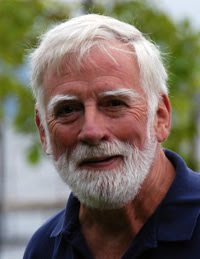
When you see a cardiac arrest, your brain fights you - "No, this isn't really happening" - and the circumstances fight you - "Dang! in CPR class the manikin didn't weigh very much and wasn't sitting in a deep chair. This blog deals with practical details and presents reports of "saves." Let me have your questions and comments - they will steer the course of this blog. This blog is brought to you by the volunteers at www.slicc.org
Thursday, March 17, 2011


Tuesday, March 15, 2011
How cool is this!!!
Flagler Palm Coast High School student Chris Cooper saved his father’s life by performing CPR on him while his father was in cardiac arrest. But, his father says, he’s still not getting a car.
Chris Cooper, a 15-year-old Flagler Palm Coast High School sophomore, has never been the type to crack under pressure.
Coming home from school one day in late January, he found his father, 45-year-old David Cooper, complaining of stomach pain.
“He couldn’t get comfortable, moving (back and forth) from his room to the couch,” Chris said. “And he was burping incessantly.”
Chris went online to research his father’s symptoms. That’s when the chest pain and arm numbness started.
“We heard a crash,” Chris said. He ran in to find David on the ground, unconscious and blue in the face. He’d had a massive heart attack.
Chris yelled for his mother to call the paramedics; then he took the phone. At first, Chris was relaying instructions to her, but “she was freaking out,” he said. “She was too crazy.”
Chris took charge.
“I got this,” he told his mother, extending his arm out in front of her for space. Then he turned his attention to the emergency services operator on the phone.
“Give me a crash course in CPR!” he recalled yelling into the receiver. “(But) she was stuttering”, he said, “and I was like, ‘No time!’ … I was off the phone in five seconds.”
Days later, looking toward his smiling father, Chris recounted the event. “I pinched (your nose) right away. (I) made sure your chest rose. Made sure you were getting air,” he said.
Chris has no formal CPR training. He thinks maybe he learned the technique subconsciously from watching TV. “I watch ‘House,’” he said.
In three minutes on the day of the incident, the paramedics arrived and rushed David to the hospital, where he stayed in the intensive care unit for two weeks.
“I didn’t think of it as heroic, or saving anyone’s life,” Chris said. “I just thought of it as necessity.”
David’s heart had stopped beating for 31 minutes. One of his arteries was 100% clogged, according to doctors.
“Every hole had a tube in it,” David said. “And they even made some new holes. … (The doctors) said I … died three times on the table.”
David now has a Pacemaker and defibrillator built into his chest.
“I’m like robo-dad,” he joked. “Doctors said it was nothing short of a miracle that I was alive. (They told me), ‘You would not be here if not for your son. And if you were, you’d be a vegetable.’”
Currently, David is taking 17 different medications. His wife of nearly 20 years spent roughly 16 hours a day by his side every day he was hospitalized.
Back home, in the Coopers’ RiverGate community, the neighborhood reaction was “amazing,” David said. “Half of them — I don’t even know half of them, dude — were bringing over full-blown meals. It was absolutely heartwarming.”
The Coopers have only lived in Palm Coast for about six months. They moved here from New Jersey for the cheaper costs of living, so they could spend more time together, as a family.
“I feel like there’s still a lot of work for me to do,” David said, “as a husband, a father … But I’m still not buying you a car,” he teased Chris, who grinned. The city of Palm Coast recognized Chris Cooper at a City Council meeting Tuesday March 1. When Mayor John Netts asked if he’d like to make a statement to the board, Chris kept it simple.
“I didn’t really think about anything at the time,” he said. “It’s not a big deal, is how I thought about it. Just natural instinct. But I’m glad he’s here still.”
Chris Cooper, a 15-year-old Flagler Palm Coast High School sophomore, has never been the type to crack under pressure.
Coming home from school one day in late January, he found his father, 45-year-old David Cooper, complaining of stomach pain.
“He couldn’t get comfortable, moving (back and forth) from his room to the couch,” Chris said. “And he was burping incessantly.”
Chris went online to research his father’s symptoms. That’s when the chest pain and arm numbness started.
“We heard a crash,” Chris said. He ran in to find David on the ground, unconscious and blue in the face. He’d had a massive heart attack.
Chris yelled for his mother to call the paramedics; then he took the phone. At first, Chris was relaying instructions to her, but “she was freaking out,” he said. “She was too crazy.”
Chris took charge.
“I got this,” he told his mother, extending his arm out in front of her for space. Then he turned his attention to the emergency services operator on the phone.
“Give me a crash course in CPR!” he recalled yelling into the receiver. “(But) she was stuttering”, he said, “and I was like, ‘No time!’ … I was off the phone in five seconds.”
Days later, looking toward his smiling father, Chris recounted the event. “I pinched (your nose) right away. (I) made sure your chest rose. Made sure you were getting air,” he said.
Chris has no formal CPR training. He thinks maybe he learned the technique subconsciously from watching TV. “I watch ‘House,’” he said.
In three minutes on the day of the incident, the paramedics arrived and rushed David to the hospital, where he stayed in the intensive care unit for two weeks.
“I didn’t think of it as heroic, or saving anyone’s life,” Chris said. “I just thought of it as necessity.”
David’s heart had stopped beating for 31 minutes. One of his arteries was 100% clogged, according to doctors.
“Every hole had a tube in it,” David said. “And they even made some new holes. … (The doctors) said I … died three times on the table.”
David now has a Pacemaker and defibrillator built into his chest.
“I’m like robo-dad,” he joked. “Doctors said it was nothing short of a miracle that I was alive. (They told me), ‘You would not be here if not for your son. And if you were, you’d be a vegetable.’”
Currently, David is taking 17 different medications. His wife of nearly 20 years spent roughly 16 hours a day by his side every day he was hospitalized.
Back home, in the Coopers’ RiverGate community, the neighborhood reaction was “amazing,” David said. “Half of them — I don’t even know half of them, dude — were bringing over full-blown meals. It was absolutely heartwarming.”
The Coopers have only lived in Palm Coast for about six months. They moved here from New Jersey for the cheaper costs of living, so they could spend more time together, as a family.
“I feel like there’s still a lot of work for me to do,” David said, “as a husband, a father … But I’m still not buying you a car,” he teased Chris, who grinned. The city of Palm Coast recognized Chris Cooper at a City Council meeting Tuesday March 1. When Mayor John Netts asked if he’d like to make a statement to the board, Chris kept it simple.
“I didn’t really think about anything at the time,” he said. “It’s not a big deal, is how I thought about it. Just natural instinct. But I’m glad he’s here still.”
Friday, March 11, 2011
Naperville student praised for quick CPR action
Every Naperville Central High School student is required to complete a CPR course before they graduate, with the hope they never have to use it.
On Sunday night, Central junior John McCarthy, who is only halfway through the class, had to use it and it worked.
ADVERTISEMENT
McCarthy is being credited by Palos Park firefighters for helping save the life of a man injured in a one-car crash in the southwest suburb.
Palos Park Fire Chief Steve Carr said a husband and wife were driving home Sunday evening on 131st Street, two blocks west of LaGrange Road, when the husband had an undisclosed “health episode” and lost control of the car.
“The driver left the roadway and drove into a condominium subdivision where he struck a utility pole and transformer box before he crashed into a condo building,” Carr said. “The vehicle was in bad shape and all of the air bags were deployed.”
McCarthy, who Carr said was visiting family members in the subdivision, came upon the scene and saw the wife attempting CPR. Carr said McCarthy evaluated the situation and told the woman he was trained in CPR and could help.
“(McCarthy) was quickly able to determine there was no pulse and the man was not breathing,” Carr said. “So he did his compressions and performed CPR until paramedics arrived and took over.”
Carr would not identify the driver but said he was being treated at Palos Community Hospital.
“This young man made a positive difference in the outcome of this call,” Carr said. “I don’t know what the outcome would have been had this young man not been in the right place at the right time. His actions afforded this gentleman every opportunity to survive this episode.”
Word of McCarthy’s heroics quickly spread through the halls of Naperville Central. Physical education coordinator Neil Duncan said he sought McCarthy out to congratulate him.
“He saved a life with his training but his comment to me was ‘anyone in class would have done the same thing,’” Duncan said. “I’d like to think that, too, but we’re all very impressed with his actions.”
Carr said he was impressed with both McCarthy and the training he received and will honor the student at a Palos Fire Protection District board meeting.
“I believe it takes a great amount of resolve to jump into a situation like that and act on behalf of a complete stranger,” Carr said. “So a selfless act like this needs to be recognized.”
McCarthy was unavailable for comment Monday.
Read more: http://dailyherald.com/article/20110307/news/703079886/#ixzz1GIfeqZmT
On Sunday night, Central junior John McCarthy, who is only halfway through the class, had to use it and it worked.
ADVERTISEMENT
McCarthy is being credited by Palos Park firefighters for helping save the life of a man injured in a one-car crash in the southwest suburb.
Palos Park Fire Chief Steve Carr said a husband and wife were driving home Sunday evening on 131st Street, two blocks west of LaGrange Road, when the husband had an undisclosed “health episode” and lost control of the car.
“The driver left the roadway and drove into a condominium subdivision where he struck a utility pole and transformer box before he crashed into a condo building,” Carr said. “The vehicle was in bad shape and all of the air bags were deployed.”
McCarthy, who Carr said was visiting family members in the subdivision, came upon the scene and saw the wife attempting CPR. Carr said McCarthy evaluated the situation and told the woman he was trained in CPR and could help.
“(McCarthy) was quickly able to determine there was no pulse and the man was not breathing,” Carr said. “So he did his compressions and performed CPR until paramedics arrived and took over.”
Carr would not identify the driver but said he was being treated at Palos Community Hospital.
“This young man made a positive difference in the outcome of this call,” Carr said. “I don’t know what the outcome would have been had this young man not been in the right place at the right time. His actions afforded this gentleman every opportunity to survive this episode.”
Word of McCarthy’s heroics quickly spread through the halls of Naperville Central. Physical education coordinator Neil Duncan said he sought McCarthy out to congratulate him.
“He saved a life with his training but his comment to me was ‘anyone in class would have done the same thing,’” Duncan said. “I’d like to think that, too, but we’re all very impressed with his actions.”
Carr said he was impressed with both McCarthy and the training he received and will honor the student at a Palos Fire Protection District board meeting.
“I believe it takes a great amount of resolve to jump into a situation like that and act on behalf of a complete stranger,” Carr said. “So a selfless act like this needs to be recognized.”
McCarthy was unavailable for comment Monday.
Read more: http://dailyherald.com/article/20110307/news/703079886/#ixzz1GIfeqZmT
Tuesday, March 8, 2011
Bystander CPR helped save Conn. man's life
More and more we are seeing these stories.
If you haven't been trained in the past two years, please get trained, dag nab it. (Thank you Gabby H.)
Bob
_________________________
A bystander, a nurse, and an off-duty New York City firefighter performed CPR on Ryan DeJonghe when he went into cardiac arrest
By Brian McCready
New Haven Register
WEST HAVEN, Conn. — Ryan DeJonghe says he would not be alive today if his parents weren't visiting from Ohio.
DeJonghe, 35, said if they weren't visiting, he would not have gone out to eat at Red Robin restaurant at the Westfield Connecticut Post mall in Milford on Feb. 19, a day that changed his life.
It was at Red Robin where DeJonghe went into cardiac arrest, and because of the quick action of several people, the father of two is alive.
"Usually, I would either be home alone with the kids or with my wife and kids. If that was the case, I wouldn't be (here) today," DeJonghe said.
DeJonghe, who came home from the hospital Tuesday, recalled feeling well, and then being shocked back to life in the emergency room at Milford Hospital.
If you haven't been trained in the past two years, please get trained, dag nab it. (Thank you Gabby H.)
Bob
_________________________
A bystander, a nurse, and an off-duty New York City firefighter performed CPR on Ryan DeJonghe when he went into cardiac arrest
By Brian McCready
New Haven Register
WEST HAVEN, Conn. — Ryan DeJonghe says he would not be alive today if his parents weren't visiting from Ohio.
DeJonghe, 35, said if they weren't visiting, he would not have gone out to eat at Red Robin restaurant at the Westfield Connecticut Post mall in Milford on Feb. 19, a day that changed his life.
It was at Red Robin where DeJonghe went into cardiac arrest, and because of the quick action of several people, the father of two is alive.
"Usually, I would either be home alone with the kids or with my wife and kids. If that was the case, I wouldn't be (here) today," DeJonghe said.
DeJonghe, who came home from the hospital Tuesday, recalled feeling well, and then being shocked back to life in the emergency room at Milford Hospital.
Friday, March 4, 2011
Another save in Albany CA
On Feb. 5, the Fire Department responded to a report of a woman who wasn't breathing.
"Upon arrival we found a female, supine on the ground, with bystander CPR in progress. CPR was stopped and it was determined the patient had a carotid pulse with no respirations," wrote Capt. John Weitzel on Feb. 15 in a report to Chief Marc McGinn. "The patient was place on our Phillips monitor and ventilations were initiated. Shortly after ventilations began the patient went into cardiac arrest with a shockable rhythm.... The patient was defibrillated ... resulting in a pulse with a viable rhythm and ... stable blood pressure."
Fire department personnel continued to ventilate the woman, established an intervenous line and provided further life support care, according to Weitzel. The Berkeley Fire Department continued advance life support care and took the woman to the hospital.
Weitzel said he spoke with the woman on Feb. 15.
"She told me she did not suffer any deficits as a result of this incident," he wrote. "I would like to thank all those involved, especially the bystanders at the Albany YMCA for their courageous actions. Bystander assistance and CPR is paramount to the chain of survival and recovery of anyone in such a critical situation."
"Upon arrival we found a female, supine on the ground, with bystander CPR in progress. CPR was stopped and it was determined the patient had a carotid pulse with no respirations," wrote Capt. John Weitzel on Feb. 15 in a report to Chief Marc McGinn. "The patient was place on our Phillips monitor and ventilations were initiated. Shortly after ventilations began the patient went into cardiac arrest with a shockable rhythm.... The patient was defibrillated ... resulting in a pulse with a viable rhythm and ... stable blood pressure."
Fire department personnel continued to ventilate the woman, established an intervenous line and provided further life support care, according to Weitzel. The Berkeley Fire Department continued advance life support care and took the woman to the hospital.
Weitzel said he spoke with the woman on Feb. 15.
"She told me she did not suffer any deficits as a result of this incident," he wrote. "I would like to thank all those involved, especially the bystanders at the Albany YMCA for their courageous actions. Bystander assistance and CPR is paramount to the chain of survival and recovery of anyone in such a critical situation."
The Science Behind Compressions Explained
[This is as reported by Richard Huff in JEMS]
Richard Huff, EMT-B | | Friday, March 4, 2011
The new 2010 American Heart Association ECC guidelines were designed to get around things that didn’t work for years—and were not backed by science, according to Joseph Ornato, MD, professor and chairman of the Department of Emergency Medicine at the Virginia Commonwealth University Health System.
“We’ve really had to admit in many cases, the science isn’t there to support the things we’ve done in the guidelines for decades,” Ornato told attendees at the EMS Today Conference & Exposition in Baltimore.
“We’re really trying to be brutally honest and not get distracted by things that really don’t work,” Ornato says, “and rather do a handful of things that do work, and really pound home the realization of those elements.”
Late last year, the guidelines were released, putting an emphasis on chest compressions. The guidelines upended the previous thinking that had rescuers providing ventilation before beginning compressions and the rapid introduction of defibrillation.
However, research showed that compressions first provided better results. Likewise, going to compressions first also encourages bystanders to get involved where they might not have in the past because of fears of doing mouth-to-mouth resuscitation.
Ornato says the notion of compressions first—and an emphasis on uninterrupted chest compressions—actually surfaced much earlier in Europe.
“The Europeans were kind of way ahead of us in being enlightened in terms of what the sequence is,” he says. “We’ve finally come around to admit they were kind of right from the beginning.”
The new compressions-airway-breathing model works best with witnessed cardiac arrests in public places, he says. Part of that is because folks who go down in public places tend to not be high-risk patients with underlying health issues. Part is also the ability of bystanders to get involved quickly and begin the process of resuscitation before trained rescuers arrive.
“What we’re left with us resuscitation and rescue, and that’s of course, a very time critical and very much dependent on us in EMS to stretch the window of time, to get help there quickly, and to get the help of bystanders,” says Ornato, who’s also the medical director for the Richmond (Va.) Ambulance Authority.
He says the good part is that most adults have pulseless ventricular tachycardia when they arrest in a public place have, and most of those people have plenty of oxygen in their lungs to be moved by compressions only.
Without effective chest compression, oxygen flow to the brain and heart stops, drugs that could help aren’t circulated, and ultimately, defibrillation is ineffective. Also, practice is required to minimize the interruptions in chest compressions to deliver a shock, he says.
Compressions build coronary perfusion pressure, he says. And research has indicated it can take 10 compressions after a rescuer stops compressions for ventilation or another intervention before the pressure is back up. He says data indicates an estimated three to five percent of EMS calls are for cardiac arrest.
Ornato says the National Institute of Health is preparing to launch a randomized test to measure the concept of whether everyone should be doing continuous compressions; they’re hoping to get 12,000 cases examined.
On the ALS side, quantitative waveform capnography is the most reliable method to confirm and monitor correct endotracheal (ET) tube placement, Ornato says. He noted a study in Orlando where one in four ET tubes were misplaced, a figure that dropped to zero after capnograpy was introduced.
He also says, the fifth link in the chain of survival is post-cardiac arrest care, which was added to emphasize the importance of comprehensive multi-disciplinary care through hospital discharge and beyond.
Ornato says it was “a very exciting time in resuscitation and it’s rapidly evolving.”
Richard Huff, EMT-B | | Friday, March 4, 2011
The new 2010 American Heart Association ECC guidelines were designed to get around things that didn’t work for years—and were not backed by science, according to Joseph Ornato, MD, professor and chairman of the Department of Emergency Medicine at the Virginia Commonwealth University Health System.
“We’ve really had to admit in many cases, the science isn’t there to support the things we’ve done in the guidelines for decades,” Ornato told attendees at the EMS Today Conference & Exposition in Baltimore.
“We’re really trying to be brutally honest and not get distracted by things that really don’t work,” Ornato says, “and rather do a handful of things that do work, and really pound home the realization of those elements.”
Late last year, the guidelines were released, putting an emphasis on chest compressions. The guidelines upended the previous thinking that had rescuers providing ventilation before beginning compressions and the rapid introduction of defibrillation.
However, research showed that compressions first provided better results. Likewise, going to compressions first also encourages bystanders to get involved where they might not have in the past because of fears of doing mouth-to-mouth resuscitation.
Ornato says the notion of compressions first—and an emphasis on uninterrupted chest compressions—actually surfaced much earlier in Europe.
“The Europeans were kind of way ahead of us in being enlightened in terms of what the sequence is,” he says. “We’ve finally come around to admit they were kind of right from the beginning.”
The new compressions-airway-breathing model works best with witnessed cardiac arrests in public places, he says. Part of that is because folks who go down in public places tend to not be high-risk patients with underlying health issues. Part is also the ability of bystanders to get involved quickly and begin the process of resuscitation before trained rescuers arrive.
“What we’re left with us resuscitation and rescue, and that’s of course, a very time critical and very much dependent on us in EMS to stretch the window of time, to get help there quickly, and to get the help of bystanders,” says Ornato, who’s also the medical director for the Richmond (Va.) Ambulance Authority.
He says the good part is that most adults have pulseless ventricular tachycardia when they arrest in a public place have, and most of those people have plenty of oxygen in their lungs to be moved by compressions only.
Without effective chest compression, oxygen flow to the brain and heart stops, drugs that could help aren’t circulated, and ultimately, defibrillation is ineffective. Also, practice is required to minimize the interruptions in chest compressions to deliver a shock, he says.
Compressions build coronary perfusion pressure, he says. And research has indicated it can take 10 compressions after a rescuer stops compressions for ventilation or another intervention before the pressure is back up. He says data indicates an estimated three to five percent of EMS calls are for cardiac arrest.
Ornato says the National Institute of Health is preparing to launch a randomized test to measure the concept of whether everyone should be doing continuous compressions; they’re hoping to get 12,000 cases examined.
On the ALS side, quantitative waveform capnography is the most reliable method to confirm and monitor correct endotracheal (ET) tube placement, Ornato says. He noted a study in Orlando where one in four ET tubes were misplaced, a figure that dropped to zero after capnograpy was introduced.
He also says, the fifth link in the chain of survival is post-cardiac arrest care, which was added to emphasize the importance of comprehensive multi-disciplinary care through hospital discharge and beyond.
Ornato says it was “a very exciting time in resuscitation and it’s rapidly evolving.”
Tuesday, March 1, 2011
Family Of Fallen Athlete Intends To Sue
Teen Collapsed, Died During Basketball Game On 18th Birthday
POSTED: Monday, February 28, 2011
UPDATED: 4:41 pm EST February 28, 2011
JACKSONVILLE, Fla. -- For Harvetta and Phillip Jackson Jr., announcing their intent to file a lawsuit in the wake of their son's death was almost as difficult as the day he died.
"It destroyed me," Harvetta Jackson said of her son's death. "It was his 18th birthday. It was an awful day."
"It's just such a horrible tragedy," she said. "I look at pictures of him, and I can't believe he's gone."
In December 2009, Phillip Jackson III collapsed during halftime of a holiday basketball tournament at Terry Parker High School.
"When we were called back there, to see him facedown, I said, 'Son, what's wrong? What's up? And it was shocking," Phillip Jackson Jr. said.
Phillip Jackson III (right) stands with his mom during his football team's senior night at Sandalwood High School.
The Sandalwood senior football and basketball player and father never regained consciousness. He died from sudden cardiac arrest.
Attorney Steve Pajcic said Jackson's death could have been prevented. He said the coaches and police officers there should have tried to save him instead of waiting for an emergency medical technician to arrive.
Pajcic also blames the 911 operator for not giving the caller CPR instructions.
"If they're in a situation where someone lost consciousness, you call 911 and you do CPR," he said.
Pajcic and Jackson's parents have sent a letter to the city, the Jacksonville Sheriff's Office, the Duval County School Board and two state agencies asking for a change in the system. They want to make sure this never happens again. "If left up to me, no one else's child will ever die from someone not calling 911 immediately or not doing CPR to help your child," Harvetta Jackson said.
The School Board said it hasn't yet received the paperwork and said it is too soon to comment.
The family is seeking monetary damages up to $200,000. The law firm said it will not take any money that comes out of the case, but if any does come, it will be given to Phillip Jackson III's son, who was 14 months old when he died.
POSTED: Monday, February 28, 2011
UPDATED: 4:41 pm EST February 28, 2011
JACKSONVILLE, Fla. -- For Harvetta and Phillip Jackson Jr., announcing their intent to file a lawsuit in the wake of their son's death was almost as difficult as the day he died.
"It destroyed me," Harvetta Jackson said of her son's death. "It was his 18th birthday. It was an awful day."
"It's just such a horrible tragedy," she said. "I look at pictures of him, and I can't believe he's gone."
In December 2009, Phillip Jackson III collapsed during halftime of a holiday basketball tournament at Terry Parker High School.
"When we were called back there, to see him facedown, I said, 'Son, what's wrong? What's up? And it was shocking," Phillip Jackson Jr. said.
Phillip Jackson III (right) stands with his mom during his football team's senior night at Sandalwood High School.
The Sandalwood senior football and basketball player and father never regained consciousness. He died from sudden cardiac arrest.
Attorney Steve Pajcic said Jackson's death could have been prevented. He said the coaches and police officers there should have tried to save him instead of waiting for an emergency medical technician to arrive.
Pajcic also blames the 911 operator for not giving the caller CPR instructions.
"If they're in a situation where someone lost consciousness, you call 911 and you do CPR," he said.
Pajcic and Jackson's parents have sent a letter to the city, the Jacksonville Sheriff's Office, the Duval County School Board and two state agencies asking for a change in the system. They want to make sure this never happens again. "If left up to me, no one else's child will ever die from someone not calling 911 immediately or not doing CPR to help your child," Harvetta Jackson said.
The School Board said it hasn't yet received the paperwork and said it is too soon to comment.
The family is seeking monetary damages up to $200,000. The law firm said it will not take any money that comes out of the case, but if any does come, it will be given to Phillip Jackson III's son, who was 14 months old when he died.
Subscribe to:
Posts (Atom)