If you received the early morning email blast today, you are already on the mail list.
Thanks, for your support.
Bob
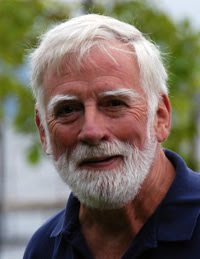
When you see a cardiac arrest, your brain fights you - "No, this isn't really happening" - and the circumstances fight you - "Dang! in CPR class the manikin didn't weigh very much and wasn't sitting in a deep chair. This blog deals with practical details and presents reports of "saves." Let me have your questions and comments - they will steer the course of this blog. This blog is brought to you by the volunteers at www.slicc.org
Boulevard Bolt runners save man's life with CPR
By Nicole Young
THE TENNESSEAN
Most people would say there's nothing lucky about having a heart attack, but for Germain Boer, the time and place were about as lucky as you can get.
Boer, 73, was recovering on Friday evening in the critical care unit at Saint Thomas Hospital. He had a heart attack Thursday morning while running in the Boulevard Bolt, a Thanksgiving tradition in Belle Meade.
"I think everything is going to be fine," said son Bob Boer. "He is awake and I was able to speak with him earlier. I told him some of the news reports were putting him at between 50 and 60 years old and he just laughed."
The elder Boer, a professor of accounting and director of the Owen Entrepreneurship Center at Vanderbilt University, runs the Bolt every year, his son said.
"He's very active and healthy," said Bob Boer. "He goes to the gym at Vanderbilt in the mornings and has his routine with his gym team, and he runs on the greenway.
"I just thank God this happened with 8,000 people instead of when he was off by himself somewhere."
Germain Boer was about a mile and a half into the Boulevard Bolt when he had the heart attack, said Troy Sparks, who was running the race for the first time alongside his wife, Beth.
The Sparkses are both registered nurses — he's in the operating room at StoneCrest, she's a nurse at John Overton High School.
Boer's luck began with the Sparkses being about 5 feet away when he collapsed.
"We thought he had tripped, so I went to see if he was OK and saw that he wasn't breathing," said Troy Sparks, who immediately began CPR. "He was purple and bleeding. He'd fallen facedown and cut his face.
"He didn't have a pulse."
Within seconds, half a dozen other runners were helping in the CPR effort.
A minute later, Boer got lucky again. Dr. Corey Slovis joined the crew.
When it comes to emergency medicine, Slovis is among the best. He is chairman of the department of emergency medicine at Vanderbilt University Medical Center and medical director for the Nashville Fire Department and Nashville International Airport.
"I was running, and I saw a number of people off to the side," said Slovis, whose family has run in the Bolt for the past 10 years. "When I looked closer, I saw someone doing compressions, and that got my attention."
Doctor was awestruck
Slovis, a doctor for about 30 years, said he was in awe by the first responders.
"Saving lives involves just a few things, and those people were doing them perfectly," he said. "There was no way it could have gone better. The only thing I did was what I do every day.
"What Nashville needs to be proud of is that so many people knew how to do expert compression CPR and they were able to come together and save this man's life. That's the real story here."
As the crew alternated doing compressions, an ambulance arrived and paramedics took over. Slovis went with him to Saint Thomas.
"Moments after I left the room, he had a (heart) rhythm," he said. "Him getting CPR within moments of collapsing is what saved his life."
Boer's son credits Slovis and Sparks with saving his father's life.
"I'm no hero," Sparks said. "We just happened to be at the right place at the right time, and there were other people there besides us who jumped in and did a lot.
“It’s overwhelming that people cared and took such initiative for a stranger,” said Scott McGuffin. “We have a lot to be thankful for this Thanksgiving,” said his wife, Colleen. “We’re just so lucky to have people who helped and a hospital that has been innovative.”

Scott McGuffin the Survivor
Eight days before Thanksgiving, McGuffin had a heart attack while driving in Doylestown near the Mercer Museum. He fell unconscious and crashed into two vehicles before slamming into a sign.
Frank Sturza saw the accident, called 911 and ran over and shut off McGuffin’s vehicle, which was revving, authorities said. Cpl. William Doucette of Doylestown police, who was soon on scene, began administering CPR in a desperate effort to save the man’s life, the McGuffins said.
Central Bucks Ambulance personnel arrived and the EMTs used a defibrillator to jump-start McGuffin’s heart. The shock treatment got McGuffin’s heart back into pace just as the ambulance arrived at Doylestown Hospital, said Eugene Vallely, a registered nurse at the hospital.
But McGuffin had experienced a major cardiac arrest and had been unresponsive for about 20 minutes, his heart lapsed in a lethal rhythm, said Vallely. The experts feared brain damage.
“It was very emotional not knowing what was going to happen,” said Colleen McGuffin.
But by last Thursday, McGuffin began to move his fingers and show signs that he could respond to voices, his wife said. By Friday, he could squeeze hands and perform a “thumbs-up” gesture.
“They started taking him off the respirator. That was a big milestone. They began taking out the other tubes,” said Colleen McGuffin. “I started to have a huge sigh of relief that he was going to be OK.”
McGuffin emerged with his long-term memory in working order. Over the weekend he had trouble remembering new things, but by Monday he was already able to recall what had happened the previous day.
He can’t remember the heart attack or accident, but on Tuesday he was walking and talking and expressing thanks for the effort and good fortune that kept him among the living against what medical experts said was fairly steep odds.
In fact, McGuffin’s ribs are what bother him most. Nine of them were broken while CPR was being administered. Vallely said such rigorous CPR was necessary.
“The fact that he got such good quality CPR saved his life,” Vallely said.
McGuffin’s survival was not only emotional for him, his wife and their two adult sons, but also for all involved who helped him, said Vallely.
A Healdsburg High School student was revived with a defibrillator this morning after he stopped breathing during basketball practice, Healdsburg Fire Chief Steve Adams said.
The fire department and Bell’s Ambulance arrived at the school three minutes after receiving a 911 call at 10:22 a.m., Adams said.
A high school coach was performing CPR on the boy, who was not breathing and had no pulse, Adams said.
Firefighters continued CPR and applied a defibrillator once to the boy’s chest. The teen gasped and his breathing and pulse resumed a short time later, Adams said.
The boy was stabilized before he was taken to Healdsburg District Hospital. He was then transferred to Oakland’s Children’s Hospital by REACH helicopter, Adams said.
Adams attributed the successful life-saving effort to the coach, who he said recognized the medical emergency and immediately starting CPR, and the quick response by firefighters and emergency medical responders.
Bobrow B. JAMA. 2010;304:1447-1454.
Cone D. JAMA. 2010;304:1493-1495.
The application of chest compression-only CPR by a layperson bystander was associated with increased survival in patients experiencing out-of-hospital cardiac arrest, results from a new analysis suggested.
Researchers observed 5,272 patients with out-of-hospital cardiac arrests during the 5-year follow-up period of the prospective, observational study. All patients were at least 18 years of age and had out-of-hospital cardiac arrests between 2005 and 2009. The relationship between layperson bystander administering CPR and survival to discharge was characterized using multivariable logistic regression analysis. The primary outcome was survival to hospital discharge, which was determined by a review of hospital records.
According to the results, 4,415 out-of-hospital cardiac arrests were reported and 779 were excluded from the analysis because the CPR was administered by a health care professional or were evaluated in a medical facility; this included 666 people who received conventional CPR, 849 who received compression-only CPR and 2,900 who received no bystander CPR.
Rates of survival to hospital discharge were higher in the compression-only group (13.3%; 95% CI, 11.0-15.6) when compared with the group with no bystander intervention (5.2%; 95% CI, 4.4-6.0) and the conventional CPR group (7.8%; 95% CI, 5.8-9.8). The researchers also reported an increase in layperson CPR from 2005 to 2009 (28.2% to 39.9%, P<.001), along with an increase in the proportion of compression-only CPR during the same time period (19.6% to 75.9%, P<.001). In increase in overall survival was also reported from 2005 to 2009 (3.7% to 9.8%, P<.001).
“Implementation of a 5-year, multifaceted, statewide public education campaign that officially endorsed and encouraged chest compression-only CPR was associated with a significant increase in the rate of bystander CPR for adults who experienced out-of-hospital cardiac arrest,” the researchers concluded. “Furthermore, chest compression-only CPR was independently associated with an increased rate of survival compared with no bystander CPR or conventional CPR.”
In an accompanying editorial, David C. Cone, MD, of Yale University School of Medicine in New Haven, Conn., said the findings regarding compression-only CPR were in line with those of previous trials that had suggested a theoretical advantage but did not offer much confirmatory data, adding that the results were encouraging, and no associations with neurologically impaired survival were reported.
“Taken together, these findings, along with the findings of the compression-only CPR trials and the findings reported by Bobrow et al suggesting a survival benefit, should encourage and justify continuing investigations involving compression-only CPR,” Cone wrote.
Abstract 12205: Saving Lives in Schools — School-based CPR-AED Programs: Awareness, Education, Planning and Partnerships
Med College of Wisconsin, Milwaukee, WI; Emory Univ Med Sch, Atlanta, GA; Univ of Washington, Seattle, WA; Univ of Wisconsin, Madison, WI; Children's Healthcare of Atlanta, Atlanta, GA; Children's Hosp of Wisconsin, Milwaukee, WI; Children's Hopsital of Wisconsin, Milwaukee, WI; Children's Hosp of Wisconsin, Milwaukee, WI
Background: Sudden cardiac death (SCD) in the young is devastating. 20% of the U.S. adult and pediatric population spends time in schools each week, making schools a strategic location for secondary prevention through CPR-AED programs.
Purpose: We sought to describe the impact of school based CPR-AED programs.
Methods: Project ADAM (PA) (Milwaukee, WI) and Project SAVE (Atlanta, GA) are community programs designed to prevent SCD in schools. The goals are directed toward schools, including (1) education/awareness of signs, symptoms, treatment of SCA, (2) implementation of CPR-AED programs in schools (3) advocacy for students to learn CPR/AED use prior to graduation. SCA events are monitored at existing participating schools. A comprehensive program includes a coordinator, EMS, first responder team development/training, purchase/maintenance of AED(s) and an emergency response plan.
Results: WI: 850 schools have CPR-AED programs (35% of all WI schools). All schools in the Milwaukee Public School system have a program and 70% of high schools have programs. Across WI, in schools where an AED was deployed at the time of a SCA, there was a 36% rate of survival to hospital discharge. Since PA started, 11 "saves" are a result of school programs: 6 adults, 5 children/adolescents. GA: Project SAVE has provided CPR-AED program information to all 180 school districts in GA. 65% of all schools have AEDs and a HeartSafe program has been recognized in 728 schools (32% of schools). From Oct 2004 — May 2010:49 (26 students; 23 adults) SCA events have been reported in GA schools. Due to improved school AED and emergency response plans, 22 of the incidents have resulted in survival to hospital discharge (45% total survival rate, 10 students; 12 adults). Many student SCAs did not occur with high school sports (2 elementary, 6 middle, and 18 high school). Diagnoses in the child/adolescent survivor group include LQTS, CA from the opposite sinus of Valsalva, HCM, Kawasaki disease, aortic stenosis, WPW, commotio cordis and lightning strike.
Conclusions: Community programs designed to assist schools implement school CPR-AED programs are successful and lead to a high survival rate for SCA occurring in schools.
Author Disclosures: S. Berger: None. R. Campbell: None. J. Drezner: None. J. Wilson: None. A. Ellison: None. M. Kessel: None. D. Klich: None. R. Neumann-Schwabe: None.
Prehospital intubation was negatively associated with return of spontaneous circulation and survival to discharge.
Although studies in children suggest worse outcomes among those managed with prehospital intubation versus bag-valve-mask ventilation (JW Emerg Med Apr 1 2000), few studies have addressed this issue in adult patients with out-of-hospital cardiac arrest. In a retrospective study of data from an emergency medical services system in North Carolina for 1142 adult patients with cardiac arrest, researchers assessed the association between performance of prehospital endotracheal intubation and return of spontaneous circulation (ROSC) in the field and survival to discharge. The decision to attempt intubation was at the paramedics' discretion.
Intubation was not performed in 203 patients. In analysis that controlled for initial arrest rhythm, patients who were managed without any attempt at prehospital intubation were 2.3 times more likely to have ROSC in the field and 5.5 times more likely to be discharged from the hospital alive than patients who had one successful prehospital intubation attempt.
Comment: The 2010 American College of Cardiology/American Heart Association Advanced Cardiac Life Support guidelines emphasize chest compressions before airway management for all patients with cardiac arrest except newborns. Although these retrospective results could not determine cause and effect, the findings suggest that attempts at prehospital intubation are associated with worse outcomes in patients with out-of-hospital cardiac arrest. Interruption of chest compressions might contribute to the worse outcomes. Further study is warranted to determine whether prehospital intubation might cause more harm than good in adult patients with cardiac arrest.
— Diane M. Birnbaumer, MD, FACEP
Published in Journal Watch Emergency Medicine November 19, 2010
Studnek JR et al. The association between prehospital endotracheal intubation attempts and survival to hospital discharge among out-of-hospital cardiac arrest patients. Acad Emerg Med 2010 Sep; 17:918.

