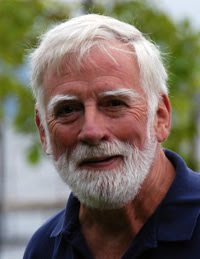
Bob
Edwards hero saves heart attack victim with CPR
by Staff Sgt. Angelique Smythe
95th Air Base Wing Public Affairs
11/17/2010 - LANCASTER, Calif. -- With his own heart racing, he made every effort to keep the heart of the man lying lifeless on the ground beating.
Compression after compression. Breath after breath. Still, no change. [In this case - a witnessed adult arrest - no mouth-to-mouth is indicated. The odds of not dying or of not winding up with neurological damage is higher if you skip the breaths and thus avoid the interruptions.]This was nothing like the movies when a victim would simply return to life within a few seconds of receiving cardiopulmonary resuscitation.
He tried to block out the chaotic shouting of bystanders throwing out suggestions of things to do to save this man's life and the constant questioning from terrified family members. Is he all right? How's he doing? Is he responding? [This is a very accurate description of what goes on when a crowd gathers. All of a sudden everybody is an expert, and it's very distracting to the person performing CPR. Try to get one person to control the crowd.]
Minutes were slowly passing, but time was running out. He was starting to feel tired. Another man dropped to his knees to assist with compressions.
Finally, after what seemed like an eternity, paramedics arrived. But his job was not over yet.
"Who's doing the CPR?" they asked.
"I am," he said.
"Keep doing it."
Manuel Jaramillo, 95th Air Base Wing Environmental Restoration specialist, continued working to keep the oxygen flowing into this stranger's lungs as the paramedics worked hastily around him in preparation for defibrillation.
Mr. Jaramillo was in the middle of a softball game on a field in Lancaster, Calif., Aug. 15, when the pitcher of the opposing team suffered a massive heart attack.
Ron Welsh, a 30-year employee of Lockheed Martin in Palmdale, Calif., had just pitched the ball when he suddenly fell to the ground, suffered convulsions, then lied motionless on the field. People quickly surrounded him. No one understood what was going on. Everyone was in a state of panic.
Mr. Jaramillo rushed to the scene and noticed Mr. Welsh's skin was beginning to turn blue. He then noticed Mr. Welsh's wife, who had also been standing there in shock along with her son, Daniel Welsh.
"It's kind of awkward to approach someone like that," Mr. Jaramillo said. "I'm not one to just step up to the plate and say, 'let me be the hero.' I said, 'Ma'am, I'm CPR certified, if there's anything I can do, just let me know and I'll help you out.'"
She immediately pushed him to the ground.
"I started to check for a pulse, but I couldn't find a pulse on him," Mr. Jaramillo recalled. "People were starting to yell things like, 'do this; do that; you've got to check his pulse over here.' I tried to block it all out and continued doing what I was doing. It's kind of difficult to check someone's pulse when you've got everything racing like that. The only pulse I felt was my own." [Don't bother with checking the pulse. It's a waste of time, and someone who isn't really good at checking pulses or doing CPR can feel a pulse on a rock. The turning blue around the mouth tells you all you need to know in this case - what's needed are chest compressions, at least 2" deep, 100 times a minute.]
Mr. Jaramillo performed CPR for approximately 10 minutes. It had been nearly one year since he was trained on this very important life-saving skill, and he would be due for recertification within one week.
Mr. Jaramillo, a three-year employee of Edwards Air Force Base, Calif., said, "We need to be (CPR) certified for our jobs because we go to really remote locations (to monitor water.) So, if something were to happen to any of us, all of us are CPR certified."
When Gary Booker, Mr. Jaramillo's teammate and a property manager in Lancaster, noticed Mr. Jaramillo was becoming weary, he got down to perform compressions.
"When you're doing that and somebody kneels down next to you and decides to give you a hand, it makes a big difference," Mr. Jaramillo said. "You can ask anybody who performs CPR training and they'll tell you that you're going to get tired from doing it. It's not like you're going to do it and then they're just going to automatically wake up. Chances are you're just keeping the guy alive until professional help arrives. There wasn't much I could do except keep his heart pumping and blood flowing throughout his extremities." [What really counts is keeping the blood flowing through the brain and heart muscle.]
Mr. Booker said he remembered looking over and seeing the man on the ground.
"He looked as if he was having a hard time breathing," he said. "I didn't move at first. Manny definitely was the first one there, and he was there all the way throughout the whole thing."
While assisting Mr. Jaramillo with compressions, Mr. Booker could hear people praying. He saw the wife crying and her son standing over her shoulder saying, "Come on, dad."
Mr. Booker said his girlfriend, a healthcare professional, assisted by taking out the victim's dentures to provide more space for an airway. [That's not as silly as it sounds to some folks: A lot of time victims in this situation will have a swelling tongue. You need all the airway room you can get. The compression-only CPR is relying on residual oxygen in the blood, residual are in the lungs, and a non-inconsequential movement of air into and out of the lungs as the chest is compressed and then recoils.]
"Manny was the guy," he said. "I mean, I jumped in and helped out, but Manny was really solely responsible for helping in keeping that man alive. I'm just thankful for his quick actions and persistence and for staying with that man until paramedics took over."
Mr. Booker said he, too, is CPR certified which is very much necessary for a high school basketball coach. He's coached for six years in both northern and southern California.
"With the responsibility of coaching, or being in a gym filled with kids, you have to have (CPR) certification," he said. "It's really helpful to know what to do if something happens."
The paramedics shocked Mr. Welsh several times on the baseball field, but he did not become any better. They rushed him to the hospital where he was placed under a medically induced coma for the next two weeks.
Mr. Welsh's son, Daniel, said his father suddenly awoke just as the doctors were getting ready to tell his family that he probably would not make it.
"The doctors still can't believe he's alive," Daniel said.
Mr. Welsh's blocked artery was one which doctors usually refer to as the 'widow-maker' as its blockage can cause a massive heart attack which most often immediately leads to death.
"He was gone from us for a couple hours and had to be resuscitated, shocked and defibrillated a few times," Daniel said. "As a 25-year-old man, I never thought I'd have to watch my father die, which in all reality, is really what happened."
Each doctor the family came across throughout Mr. Welsh's month-long stay at the hospital told them that if it weren't for the two gentlemen who performed CPR, he would not have made it off of the baseball field, let alone his going home to them within a few weeks.
"(Manny) is an angel; he was sent from God to watch over my father," Daniel said. "The doctors said only three percent of people who get CPR outside of the hospital even make it to the hospital because people don't always do it correctly. It so happened that Manny and (Gary) knew what they were doing. They worked perfectly in unison as a team. I owe them my deepest gratitude."
Each week, Daniel called Mr. Jaramillo to keep him updated on Mr. Welsh's status. After his release from the hospital, for the first time since the incident, Mr. Welsh and his family attended another softball game in late September. He thanked everyone for their support and expressed his appreciation to the men who saved him.
It was then Mr. Jaramillo and Mr. Welsh were finally introduced to one another.
"The really cool thing is we ended up playing (Mr. Welsh's team) a few weeks later," Mr. Booker said. "It was at the same time on the same field as the previous game. Before the game, everyone recognized he was there. Our team went over to the bleachers, shook his hand and expressed how glad they were to see him back."
Mr. Welsh said he encourages everyone to learn CPR. Although he, himself, hasn't yet had CPR training, he said this will become one of his top priorities after full recovery.
"It saved my life, and I thank Manny everyday that he took this class," he said.
On Nov. 12, the two reunited again for a photo for this article and the Welsh family continuously expressed feelings of gratitude to Mr. Jaramillo.
by Staff Sgt. Angelique Smythe
95th Air Base Wing Public Affairs
11/17/2010 - LANCASTER, Calif. -- With his own heart racing, he made every effort to keep the heart of the man lying lifeless on the ground beating.
Compression after compression. Breath after breath. Still, no change. [In this case - a witnessed adult arrest - no mouth-to-mouth is indicated. The odds of not dying or of not winding up with neurological damage is higher if you skip the breaths and thus avoid the interruptions.]This was nothing like the movies when a victim would simply return to life within a few seconds of receiving cardiopulmonary resuscitation.
He tried to block out the chaotic shouting of bystanders throwing out suggestions of things to do to save this man's life and the constant questioning from terrified family members. Is he all right? How's he doing? Is he responding? [This is a very accurate description of what goes on when a crowd gathers. All of a sudden everybody is an expert, and it's very distracting to the person performing CPR. Try to get one person to control the crowd.]
Minutes were slowly passing, but time was running out. He was starting to feel tired. Another man dropped to his knees to assist with compressions.
Finally, after what seemed like an eternity, paramedics arrived. But his job was not over yet.
"Who's doing the CPR?" they asked.
"I am," he said.
"Keep doing it."
Manuel Jaramillo, 95th Air Base Wing Environmental Restoration specialist, continued working to keep the oxygen flowing into this stranger's lungs as the paramedics worked hastily around him in preparation for defibrillation.
Mr. Jaramillo was in the middle of a softball game on a field in Lancaster, Calif., Aug. 15, when the pitcher of the opposing team suffered a massive heart attack.
Ron Welsh, a 30-year employee of Lockheed Martin in Palmdale, Calif., had just pitched the ball when he suddenly fell to the ground, suffered convulsions, then lied motionless on the field. People quickly surrounded him. No one understood what was going on. Everyone was in a state of panic.
Mr. Jaramillo rushed to the scene and noticed Mr. Welsh's skin was beginning to turn blue. He then noticed Mr. Welsh's wife, who had also been standing there in shock along with her son, Daniel Welsh.
"It's kind of awkward to approach someone like that," Mr. Jaramillo said. "I'm not one to just step up to the plate and say, 'let me be the hero.' I said, 'Ma'am, I'm CPR certified, if there's anything I can do, just let me know and I'll help you out.'"
She immediately pushed him to the ground.
"I started to check for a pulse, but I couldn't find a pulse on him," Mr. Jaramillo recalled. "People were starting to yell things like, 'do this; do that; you've got to check his pulse over here.' I tried to block it all out and continued doing what I was doing. It's kind of difficult to check someone's pulse when you've got everything racing like that. The only pulse I felt was my own." [Don't bother with checking the pulse. It's a waste of time, and someone who isn't really good at checking pulses or doing CPR can feel a pulse on a rock. The turning blue around the mouth tells you all you need to know in this case - what's needed are chest compressions, at least 2" deep, 100 times a minute.]
Mr. Jaramillo performed CPR for approximately 10 minutes. It had been nearly one year since he was trained on this very important life-saving skill, and he would be due for recertification within one week.
Mr. Jaramillo, a three-year employee of Edwards Air Force Base, Calif., said, "We need to be (CPR) certified for our jobs because we go to really remote locations (to monitor water.) So, if something were to happen to any of us, all of us are CPR certified."
When Gary Booker, Mr. Jaramillo's teammate and a property manager in Lancaster, noticed Mr. Jaramillo was becoming weary, he got down to perform compressions.
"When you're doing that and somebody kneels down next to you and decides to give you a hand, it makes a big difference," Mr. Jaramillo said. "You can ask anybody who performs CPR training and they'll tell you that you're going to get tired from doing it. It's not like you're going to do it and then they're just going to automatically wake up. Chances are you're just keeping the guy alive until professional help arrives. There wasn't much I could do except keep his heart pumping and blood flowing throughout his extremities." [What really counts is keeping the blood flowing through the brain and heart muscle.]
Mr. Booker said he remembered looking over and seeing the man on the ground.
"He looked as if he was having a hard time breathing," he said. "I didn't move at first. Manny definitely was the first one there, and he was there all the way throughout the whole thing."
While assisting Mr. Jaramillo with compressions, Mr. Booker could hear people praying. He saw the wife crying and her son standing over her shoulder saying, "Come on, dad."
Mr. Booker said his girlfriend, a healthcare professional, assisted by taking out the victim's dentures to provide more space for an airway. [That's not as silly as it sounds to some folks: A lot of time victims in this situation will have a swelling tongue. You need all the airway room you can get. The compression-only CPR is relying on residual oxygen in the blood, residual are in the lungs, and a non-inconsequential movement of air into and out of the lungs as the chest is compressed and then recoils.]
"Manny was the guy," he said. "I mean, I jumped in and helped out, but Manny was really solely responsible for helping in keeping that man alive. I'm just thankful for his quick actions and persistence and for staying with that man until paramedics took over."
Mr. Booker said he, too, is CPR certified which is very much necessary for a high school basketball coach. He's coached for six years in both northern and southern California.
"With the responsibility of coaching, or being in a gym filled with kids, you have to have (CPR) certification," he said. "It's really helpful to know what to do if something happens."
The paramedics shocked Mr. Welsh several times on the baseball field, but he did not become any better. They rushed him to the hospital where he was placed under a medically induced coma for the next two weeks.
Mr. Welsh's son, Daniel, said his father suddenly awoke just as the doctors were getting ready to tell his family that he probably would not make it.
"The doctors still can't believe he's alive," Daniel said.
Mr. Welsh's blocked artery was one which doctors usually refer to as the 'widow-maker' as its blockage can cause a massive heart attack which most often immediately leads to death.
"He was gone from us for a couple hours and had to be resuscitated, shocked and defibrillated a few times," Daniel said. "As a 25-year-old man, I never thought I'd have to watch my father die, which in all reality, is really what happened."
Each doctor the family came across throughout Mr. Welsh's month-long stay at the hospital told them that if it weren't for the two gentlemen who performed CPR, he would not have made it off of the baseball field, let alone his going home to them within a few weeks.
"(Manny) is an angel; he was sent from God to watch over my father," Daniel said. "The doctors said only three percent of people who get CPR outside of the hospital even make it to the hospital because people don't always do it correctly. It so happened that Manny and (Gary) knew what they were doing. They worked perfectly in unison as a team. I owe them my deepest gratitude."
Each week, Daniel called Mr. Jaramillo to keep him updated on Mr. Welsh's status. After his release from the hospital, for the first time since the incident, Mr. Welsh and his family attended another softball game in late September. He thanked everyone for their support and expressed his appreciation to the men who saved him.
It was then Mr. Jaramillo and Mr. Welsh were finally introduced to one another.
"The really cool thing is we ended up playing (Mr. Welsh's team) a few weeks later," Mr. Booker said. "It was at the same time on the same field as the previous game. Before the game, everyone recognized he was there. Our team went over to the bleachers, shook his hand and expressed how glad they were to see him back."
Mr. Welsh said he encourages everyone to learn CPR. Although he, himself, hasn't yet had CPR training, he said this will become one of his top priorities after full recovery.
"It saved my life, and I thank Manny everyday that he took this class," he said.
On Nov. 12, the two reunited again for a photo for this article and the Welsh family continuously expressed feelings of gratitude to Mr. Jaramillo.


 200 people/ye